
Authors: Warren Berkstresser Philip Cunningham
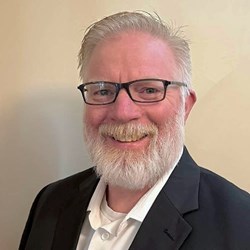
In January 2025, southern California experienced the costliest wildfires in insurance history, causing widespread devastation and highlighting the growing threat of the wildfire peril globally. In response to this escalating risk, Gallagher Re has appointed its first Global Wildfire Peril Lead, Dr Philip Cunningham, an atmospheric scientist with over two decades of experience in wildfire science and risk modeling for the (re)insurance sector.
Cunningham, who joined in December 2025, is one among a new group of peril leads within Gallagher Re's Global Property Research team, with specialists covering several major reinsurance perils: tropical cyclone / hurricane, severe convective storm and flood, in addition to wildfire.
Combining scientific expertise and industry experience, each of these peril leads will be responsible for broad technical oversight and delivering client insights in their respective fields. Presiding over model development and model evaluation projects they will support carriers in making informed decisions in underwriting, pricing, accumulation management and reinsurance placement.
In this interview with Gallagher Re's Head of Regional North American Property, Warren Berkstresser, Cunningham shares his insights on the lessons learned from recent wildfires across the globe, recent developments in wildfire modeling and his vision for advancing Gallagher Re's wildfire analytics and advisory services through improved global reach, granular spatial analysis and a greater recognition of the human factor.
Warren Berkstresser: We're now slightly more than one year on from the January 2025 Los Angeles wildfires, a devastating episode that destroyed thousands of properties and caused insurance losses approaching USD40 billion. Has this served to raise the profile of wildfires in the insurance industry generally?
Philip Cunningham: Absolutely, yes. Wildfires were already on the industry's radar due to events like the 2018 Camp Fire in Northern California, which resulted in the loss of 18,000 structures, and the devastating bushfires in Australia during the 2019-2020 season. We've also seen many serious conflagrations in Mediterranean Europe, Turkey, South America and South Africa in recent years. But the January 2025 fires have certainly underscored the need for the insurance industry to treat wildfires as a year-round primary peril rather than a secondary one.
WB: You mentioned bushfires in Australia. There seems to be a decreasing trend in these fires in recent years. Does this stand out to you as against the global trend?
PC: While the last few years have been relatively inactive in Australia, the latter part of 2025 and January 2026 have already seen damaging fires in Victoria due to particularly dry conditions. Like other areas of the world, Australia has experienced cycles of wet and dry years, which are critical in determining fire activity. Climate cycles like El Niño and La Niña, as well as the Indian Ocean Dipole, play a significant role in modulating rainfall and drought in the region and around the world. This variability is tied to climate patterns, and while climate change plays a role, regional factors (including human) and natural variability remain dominant drivers.
WB: Do you think the industry has improved its modeling of this peril in recent years?
PC: Yes, there have been significant improvements, and a dramatic increase in the number of models available — in particular, the risk-score and hazard-score type models, which are often developed by the InsurTech community and aimed at facilitating underwriting. In fact, Gallagher Re offers its own Wildfire Hazard Scoring model, which has been used effectively by clients in underwriting and pricing since 2017 (more on that later). We are all learning from each other, and these types of scores are becoming steadily more sophisticated over time.
One of the key developments is the involvement of experienced wildfire scientists in the (re)insurance sector — and more collaboration between them and the model developers. This collaboration in turn has led to better data and more advanced modeling approaches with positive impacts on how these models can capture insurance risk with increased effectiveness.
WB: That brings us on to your role at Gallagher Re. Can you give us an overview of your career and background?
PC: By training, I am an atmospheric scientist and began my career as a professor of meteorology at Florida State University. So, my journey into wildfire science started 25 years ago, focusing on fundamental questions about wildfire behavior and its interaction with the atmosphere. I've studied the way that fires create their own weather patterns, including pyro-cumulonimbus clouds and fire-induced wind systems.
After spending almost a decade in academia, I moved to Los Alamos National Laboratory, where I worked on advanced wildfire modeling using supercomputers to simulate fire behavior in a highly detailed manner. Later, I worked at Verisk, one of the leading model vendors, and contributed to the development of wildfire catastrophe models for the US and Australia.
Joining Gallagher Re as the Global Wildfire Peril Lead is an exciting opportunity to bring my expertise to a role that focuses on helping clients understand and manage wildfire risk.
WB: What is your agenda for what you want to build here at Gallagher Re?
PC: My role is to bring specialized knowledge and experience to evaluate vendor models, further develop proprietary tools like our Wildfire Hazard Score and Area Rating Factor aggregation management framework, and provide clients with unique insights into wildfire risk.
The most recent example of that was our work analyzing the LA wildfires. One of the most common questions we get asked is, 'could that sort of event happen again?' Obviously, the answer is yes. We can point to how an event similar to the LA wildfires can quite easily happen again, and in fact have done work suggesting a 1-in-35-year return period for these sorts of events. This calculation, set out in our recent white paper on the California wildfires, is based on the total insured value (TIV) within historical footprints, rather than being based on insured loss.
That approach is important. We asked the question: 'When can we expect another event that threatens similar levels of insured value?' Typically, vendor models would look through a slightly different lens; namely when we can expect a financial loss of this magnitude. That generally produces a return period that is quite a bit higher, but for a multitude of reasons there can be significant variations between loss causing events in the ratio of TIV to insured loss — some of which are modeled and some of which are not — so using TIV is a way to put all fires on an equal footing, as it were. The return period of insured loss is an incredibly important thing to know as well, of course, but we think it is very useful to have both metrics.
Wildfires are a uniquely human-centric peril, influenced by human activities such as land management, fire suppression and urban development. One of my goals is to develop new tools, analytics and services that take more account of what we might call 'secondary characteristics' — properties are constructed using which material; any fire defence or mitigation features, etc. Now to an extent, these characteristics are already included in the vendor models, but there is plenty of opportunity to flesh them out. And as brokers, we can certainly help our clients understand the relative importance of secondary factors such as construction materials, and how sensitive the models are to mitigations like the use of fire-resistant materials, or creating defensible space.
WB: Can you tell us a bit more about Gallagher Re's Wildfire Hazard Score, and any plans to develop this further?
PC: The Wildfire Hazard Score is a proprietary risk score model developed by Gallagher Re. It is not a catastrophe model but rather a tool designed to provide unique insights into wildfire risk. The model uses the latest high-resolution data from the US Forest Service and incorporates additional factors related to fuels, industry exposures and WUI boundaries. Again, the LA wildfires provided a powerful demonstration of the model's effectiveness, as we showed in our recent paper. In Los Angeles County, for example, where wildfire scoring rates roughly 70% of industry exposure as 'negligible' or 'low', Gallagher Re's model correctly identified 100% of the risks within the Eaton and Palisades fire perimeters as 'extreme'.
The model currently covers the United States, Canada, Australia and Europe, and we aim to expand its geographic scope to include regions like Asia, Latin America and Africa. The goal is to provide clients with a global perspective on wildfire risk and help them manage their portfolios more effectively.

Fire Perimeters: CAL Fire┃Data, Analysis and Graphic: Gallagher Re
Eaton and Palisades fire perimeters overlaid on the Gallagher Re wildfire scoring map, demonstrating accurate risk identification
WB: Gallagher Re also offers another wildfire risk management tool known as the Area Rating Factor. Can you tell us more about this?
PC: Our Area Rating Factor is a risk-weighted aggregation tool that goes in conjunction with the Wildfire Hazard Score Model to allow more efficient derisking of insurers' portfolios. It helps them to consider not only the hazard of an individual location, but also the aggregated exposure across the whole of a wildfire-prone area. It's an extremely useful framework that aligns very closely with reinsurance capital requirements and, ultimately, capital costs.
Within such areas, it can identify smaller locations that have less correlation to the portfolio's wildfire tail, which can help insurers to optimize their underwriting — providing opportunities to reduce potential loss, while growing their book. We have one client, for example, who used this tool in conjunction with the Hazard Score, and achieved a 30% reduction in their Probable Maximum Loss (PML) while growing their total exposure by 6% in two years.
Building on this kind of work is one of my goals at Gallagher Re — to extend our solutions that allow for more spatial refinement of managing risk. The Area Rating Factor is a good example of the sort of things that we can do. Many companies have a hazard score product, and while Gallagher Re's model is demonstrably accurate and reliable, from a portfolio management standpoint it really comes down to what you do with it — and how you can combine it with other tools to help clients build a portfolio that's substantially less risky than the one they had before.
WB: How significant was the recent regulatory move in California, when they allowed insurers to include model output in their insurance pricing calculations for the first time?
PC: It's a massive development, and a necessary one. Previously, insurers in California were restricted to using historical data for pricing and underwriting, which posed significant challenges. Historical data alone can be misleading, as areas that haven't experienced recent fires may still be at high risk due to the accumulation of fuels over time. The ability to use catastrophe models allows insurers to fill in the gaps in historical data and create a more comprehensive picture of wildfire risk.
This regulatory change is particularly important in areas like Paradise in California, where the lack of recent fires led to an underestimation of risk. Cat models can provide a more accurate assessment of risk by considering factors like burn probability, intensity and vulnerability, which are not captured by historical data alone.
Even before the recent reforms, a diverse group of Gallagher Re's insurer clients, collectively covering around 20% of the California market, had incorporated our Wildfire Hazard Score into their regulatory filings. They had to work within the constraints of the system at the time, which made the outputs more historical and backward-looking than they would otherwise have been. But now that there is more flexibility, our clients are well-positioned for the transition.
WB: We have heard a lot about the development of AI in the insurance industry in the past few years; is it having a big impact upon catastrophe and wildfire modeling?
PC: Yes, it's significant. These technologies have the potential to account for new data and risk characteristics, speed up simulations and provide new insights into wildfire risk. For example, AI has the potential to create models that are statistically indistinguishable from traditional models but run much faster, enabling more scenarios to be analyzed.
However, the challenge lies in validating these models and ensuring they accurately capture the complexities of wildfire behavior. At Gallagher Re, we are exploring the use of AI in wildfire modeling; I have been doing some work with academics at Imperial College in London in this area. It is early days yet, but we are working to develop innovative tools that can provide clients with more precise and actionable insights.
WB: How are you talking to clients about wildfire risk right now?
PC: My advice to clients is to focus on understanding the spatial distribution of their portfolios and to use tools like the Area Rating Factor to manage and de-risk their exposures. While the existing models are generally fit for purpose, there is always room for improvement, particularly in capturing the tail risk of high-loss events.
I also emphasize the importance of mitigation and preparedness. There are well-established practices that can significantly reduce the risk of property loss, such as creating defensible space, using fire-resistant building materials and implementing neighborhood-scale fuel reduction programs. These measures can make a substantial difference in increasing the survivability of properties in wildfire-prone areas.
Ultimately, our role is to help our clients refine their view of risk and narrow the uncertainty bounds on that risk, to enable more profitable policies to be written.
WB: What would your advice be to carriers, specifically within California, looking to improve their decision-making around wildfire?
PC: Wildfire is a specialist peril — not a generalist one. As a result, it requires more sophisticated approaches than ever before in relation to risk selection, policy segmentation and aggregation management.
Realistically, if you are not actively doing all these things in new and thoughtful ways, you risk being adversely selected against, and your book deteriorating along with your carrier's profitability and relevance. The time is now to evolve appropriately — and that's where we can help.
Want to learn more about how Gallagher Re can help you to write wildfire risk more profitably? Reach out to the team today.