
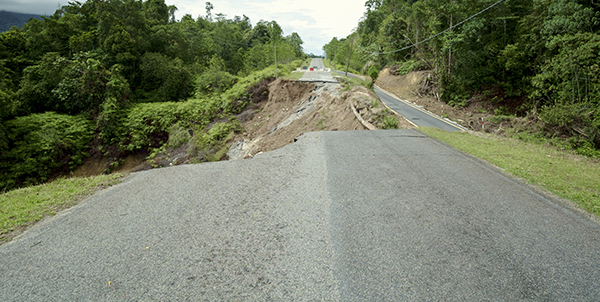
With a magnitude of Mw 7.5 (MJMA 7.6) the effects of the earthquake resulted in damage to over 170,000 buildings, with inland and coastal infrastructures compromised across six prefectures. The General Insurance Association of Japan (GIAJ) reported that, as of 31 May 2024, over 100,000 claims have been settled and JPY91 billion has been paid out for the event.
The average payout for the event is smaller than previous earthquake events, with payout per claim coming under JPY1 million compared to the 2011 Great East Japan earthquake and the 2016 Kumamoto earthquake, with over JPY1.5 million per average claim.
Despite this, the Noto Peninsula earthquake demonstrates that there remain ongoing challenges in earthquake and tsunami mitigation, even in Japan, which has some of the most advanced earthquake disaster mitigation awareness and technology in the world.
This article revisits the event with tsunami specialist Dr. Anawat Suppasri of Tohoku University's International Research Institute of Disaster Science, a Gallagher Research Centre partner, and examines the damages and cascading impacts that were observed during the 2024 Noto Peninsula earthquake.
Dr Suppasri explores some of the reasons why average payouts were lower for this event; the impact of old building stock in earthquake resistance measures; and why a similar event elsewhere in Japan is unlikely to result in such significant damage.
View Report