
Author: Antoine Bavandi
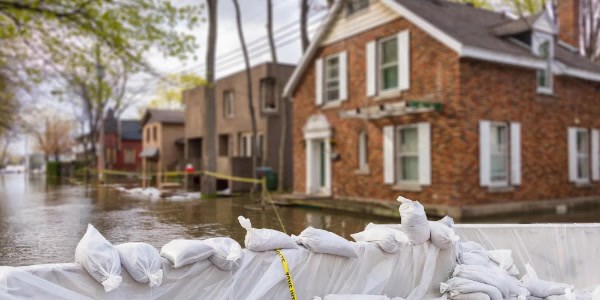
With climate change and an ever more interconnected global risk environment, traditional indemnity insurance models can struggle to provide timely and adequate coverage to evolving clients' needs. Parametric insurance has emerged as a promising solution to bridge this gap, offering innovative ways to enhance financial resilience and sustainable growth.
Question: Can you explain how parametric insurance differs from traditional indemnity insurance?
A: The main difference lies in the predictability and objectivity of the claim settlement mechanism. Parametric payouts are based on predefined triggers rather than actual loss assessments. Parametric triggers are typically based on independent third-party datasets or models, such as those provided by the US Geological Services (USGS) for seismic events. When specific parameters such as an earthquake's magnitude or intensity exceed a certain threshold, policyholders receive a predetermined payout, regardless of the actual damage incurred.
Q: What are the key benefits?
A: This approach offers several advantages, especially in the face of new or evolving risks such as climate change, natural disasters and pandemics.
One of the key benefits is the ability to provide rapid payouts within days or weeks after an event, which is crucial for businesses and communities needing immediate financial relief post-disaster. This sharply contrasts with traditional indemnity claims, which can take months to resolve due to the significant volume of cases that arise following a severe natural disaster.
Parametric insurance is also highly customizable, allowing businesses to tailor coverage to specific needs, assets or risks that are otherwise difficult to insure. This holds especially true for risks where limited data on the insured asset is available.
Q: What are some areas where parametric insurance is a more attractive solution than it was thought to be previously?
A: It is proving highly valuable for clients that have been newly affected by certain perils such as severe convective storms (SCS), hail or droughts in ways never experienced before. The parametric data-driven approach combined with recent analytical advancements - including the continuous improvement of remote sensing data, IoT sensor technology, and latest weather models – not only enhances accuracy and responsiveness but also enables new applications and addresses traditional market gaps. As an example of such a trend, Gallagher Re has been successfully structuring and placing a growing number of parametric SCS reinsurance transactions which reflects this momentum and addresses the needs from insurance companies for new, more customizable risk financing solutions.
Q: How is Gallagher Re using parametric risk transfer to assist in closing the Protection Gap?
A: Parametrics have been a game-changer and a long-term partner for public sector clients, particularly in developing countries where traditional (re)insurance penetration rates continue to lag behind economic growth.
By leveraging the rapid and customizable nature of parametric products, governments, development and humanitarian partners can secure optimal funding for emergency response and recovery, reducing the fiscal and financial burden and allowing for timely assistance to affected communities. This is particularly important in times of high geopolitical uncertainty, where post-disaster donors' assistance is scarce and less reliable than it used to be. Furthermore, parametric structures are often an efficient way to cover critical infrastructure & services against natural disasters, providing public entities with immediate liquidity to reinstate operations and minimize socio-economic disruptions.
Conclusion
As climate resilience and adaptation need a broader suite of solutions and as the protection gap continues to test the limits of traditional insurance, parametric risk transfer offers a viable pathway to enhance coverage and financial response to disasters. Its speed, transparency and flexibility make it an attractive option for addressing the diverse risks faced by individuals, businesses, insurers and governments. By embracing parametric insurance, our industry can play a pivotal role in closing the protection gap, fostering a more resilient and sustainable future for all.