

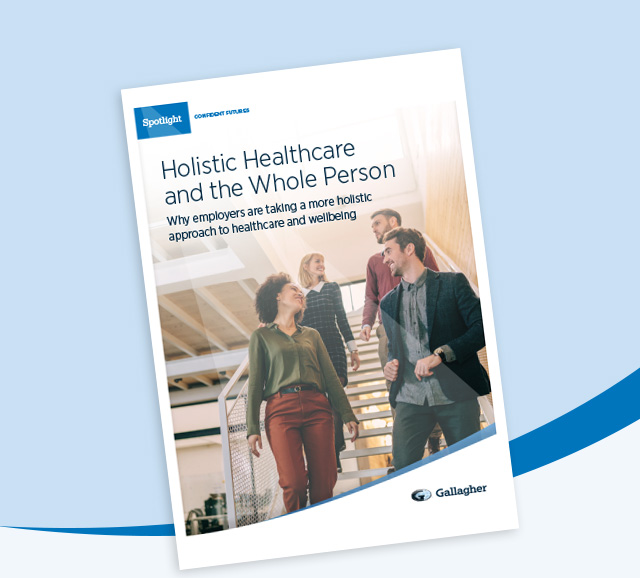
Why employers are taking a more holistic approach to healthcare and wellbeing, and what they're doing to capture ROI

Key insights

  • Medical benefit costs continue to rise, but employee engagement and health outcomes aren't improving.
  • Employers are thinking differently about health and wellbeing amid changing workforce demographics and expectations.
  • A holistic approach focuses on the "whole person" and their physical, mental, social and financial needs.
  • Demonstrating return on investment (ROI) requires expanding traditional metrics and recognizing wellbeing as a strategic asset, not a cost center.
Almost everyone has felt burned out at some point in their career: their mind constantly reshuffling priorities, pressures at home and at work, and the feeling that there are mountains to climb daily. Add poor physical health, financial worries and/or loneliness into the mix, and it's inevitable that wellbeing will wane.

Employers know that stress, depression and anxiety cost USD1 trillion1 in lost productivity each year, and they're walking a fine line: caring for employees without crossing the line. So, how can employers make a meaningful difference to workforce health and wellbeing while retaining trust and feeling the benefits?

Leading organizations have made emotional wellbeing their top investment priority in 2025, acknowledging the urgent need to address the effects of stress factors on individuals and its impact on organizational resilience.

Part of the answer lies in adopting a holistic approach to healthcare and wellbeing. This approach involves seeing health through a wider lens and recognizing it as a system in which physical, mental, social and financial health are interdependent.

There's a growing appreciation that prevention is better than cure. Businesses that proactively address mental health by removing stigma and promoting early intervention, for instance, found that while the number of reported cases increased, the overall insurance claim costs were lower.

While measuring ROI remains difficult, the advantages show up in talent retention, engagement and trust. As such, organizations are expanding the range of metrics they capture to help better demonstrate the true value of benefits and initiatives designed around health and wellbeing.

Knowing that care encompasses all aspects of an employee's wellbeing and ensuring leaders have the right data to make informed decisions is more critical than ever.
John Tournet, US CEO of Gallagher's Benefits and HR Consulting Division

Practical workplace solutions to support the four pillars of wellbeing

Healthy competition to promote physical wellbeing

Peer-led initiatives have greater success. Instead of top-down mandates, employee-driven activities — like step challenges or sports meetups — foster authentic engagement and meaningful outcomes.

Scheduled time off to prioritize emotional wellbeing

Dedicated time off for emotional wellbeing signals that mental health is a priority. Company-wide wellbeing days, after-hours rules and "no-meeting Fridays" reflect leadership's commitment to work-life balance.

Making connections: Building social wellbeing together

As hybrid work reshapes interactions, it's important to balance flexibility with in-person engagement to combat loneliness. This balance can be achieved by hosting events, designing collaborative spaces and training leaders in open communication styles.

Financial wellbeing through education and in-house support

Providing budgeting, investing and pension planning support can reduce financial anxiety. Quality-of-life products like pet insurance, discount programs, legal plans and identity theft protection can further build financial wellbeing.

CONNECT WITH US

Published in November 2025