Authors: Joseph Mwinga Rob Mitchell

A tailored retirement plan with personalized support can bridge gaps in retirement readiness and strengthen financial stability over the course of an employee's career. As personal priorities shift due to life changes, connecting employees with the right resources at the right time is key.
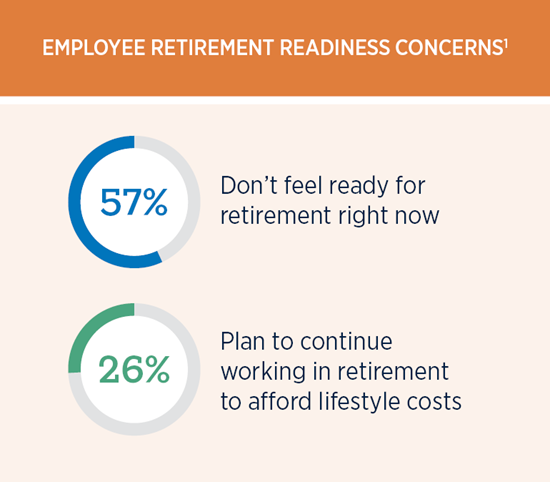
For employees who feel unprepared for retirement, the primary concern will often be the earnings growth of their employer retirement plan. Uncertainty in the investment space and global economy is also fueling concern. Slightly more than half of Canadians say they don't feel ready for retirement right now and about a quarter plan to continue working in retirement to afford their lifestyle costs.1
To help alleviate concerns, employers can support education and planning that includes accurate projections. Employees should consider their total financial picture and use all available tools to establish a realistic retirement target date, gaining a clear vision of the steps needed to achieve it and calm their financial fears.
A financially comfortable retirement requires strategies for initial investments and sustainable draw-down from retirement income. These strategies should be supported by realistic lifestyle expectations. The challenge lies in finding the right mix of products within the employer retirement plan to complement government plans while fostering effective education, participation, guidance and planning.
Broadening the approach to financial literacy
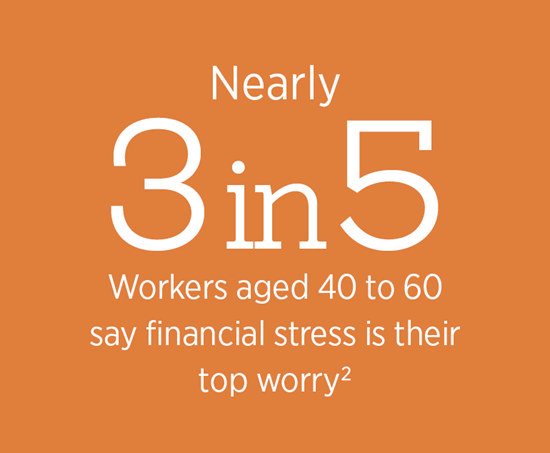
Navigating the path to retirement can be complex, making education crucial, especially for younger generations. However, even workers aged 40 to 60 cite financial stress as their top worry.2 Accordingly, the focus is shifting from solely retirement planning to overall financial literacy. This broader approach includes guidance on effectively managing finances, budgeting, saving and investing.
While insurers have introduced innovative programs to facilitate access to appropriate advice and resources, there's still room for further development and improved usage rates. In response, the industry is evolving, offering products, services and strategies to better communicate and engage with employees.
Financial advice and analytics tools are more prevalent today than they were just five years ago. The opportunity to meet with a licensed financial advisor in a purely consultative and planning context can provide employees with much-needed guidance. When offered at no cost to the employee, this service helps build trust and reduce engagement barriers while enhancing financial literacy. Increasingly, providers welcome spouses and partners to the planning process, which creates synergy in achieving shared financial goals. For employers, these offerings enhance the value of total rewards and facilitate a smooth and timely transition out of the workforce for their employees.
How does it work? The retirement planning process often begins with an investor personality questionnaire to determine risk tolerance. This questionnaire is followed by income, savings and age considerations to establish a target retirement date. Some employees may prefer their advisor to recommend retirement investments that best align with their circumstances, while others may choose to make their own selections.
In either case, "target date" funds (focused on retirement year) or "target risk" funds (focused on risk tolerance) are convenient options to align with employee preferences and needs. Fixed income, money market and guaranteed funds are attractive choices for those seeking lower-risk options. But regardless of individual comfort levels, professional guidance, particularly in a volatile market, helps employees feel more secure in their investment decisions.
Employees must also evaluate and consider which savings accounts make the most sense for them. Registered retirement savings plans (RRSPs) or tax-free savings accounts (TFSAs) are primary vehicles, but carriers are getting more creative. For example, a tax-advantaged registered education savings plan (RESP) to help secure education funding for children could be right for parents. Student debt repayment programs or a first-time home buyer program may provide the greatest value for graduates. Retirement investments that connect with employees' religious and ethical beliefs are also becoming increasingly common.
Most importantly though, financial advisors need to understand their clients as individuals, help close knowledge gaps and design plans around personal traits and circumstances. For employers, there's a responsibility to avoid overloading retirement plans to the point of confusion. Too many choices can dilute program value and make it harder for employees to navigate.
Early and accurate planning is key
Retirement planning calculators available to employees are becoming more sophisticated. Employees can now incorporate group plan contributions and savings to project their balance at their target retirement age, while also accounting for other assets. These calculators typically include a gap analysis feature, offering suggestions to help employees reach their target. For instance, taking full advantage of employer-matched savings is an effective way to significantly grow savings over time.
Engaging younger employees in retirement planning is essential for fostering financial literacy and discipline, which are closely linked to organizational loyalty and retention. Individuals in their 20s or 30s often deprioritize saving for retirement. It's important for them to understand how their employer retirement plan works and the benefits of starting to save early, particularly due to the power of compound interest. Employers should aim to encourage younger employees to attend educational sessions that highlight these advantages and demonstrate the impact on their future financial security. These sessions also provide an opportunity to educate employees on other topics that build financial literacy, contributing to better retirement outcomes.
Paving the way for a successful transition
Having succession and transition plans in place can significantly reduce operational friction, providing peace of mind for individuals nearing the end of their careers. Success in these efforts depends on leaders who embrace and effectively communicate planning initiatives to foster a culture of healthy retirement.
It's imperative to address both the mental and emotional aspects of retirement, as well as prepare individuals for the practicalities of exiting the workforce. Hearing from those who have already retired can offer valuable insights to soon-to-be retirees, helping them navigate the emotional and financial transitions involved. This support allows them to focus more on their final career stages and worry less about retirement planning.
Support beyond employment is an added value for employees. Maintaining relationships with carriers after leaving a job helps provide continuity and, critically, access to professional guidance. Planning to ensure retirement income lasts as long as needed is crucial. Plan members need to understand the impact of withdrawing from various sources at optimal times and how these withdrawals will maximize the value of their retirement investments. Carriers are increasingly developing these capabilities to guide retirees and help them make the right choices.
Engaging employees through effective communication
Forward-thinking employers communicate frequently and clearly, helping to ensure their efforts align with other financial wellbeing initiatives. As a result, they often achieve higher participation rates in savings plans, improved retirement readiness and enhanced overall employee wellbeing. This approach should extend beyond retirement planning to include a broader range of benefits, contributing to a more holistic employee experience.
But as the market evolves, further innovation in retirement readiness is anticipated, with better data, personalized tools and more insurers entering the space. A well-defined retirement plan philosophy guides organizational decisions, promoting inclusivity in retirement investment options and offering flexibility in savings vehicles. Financial coaching and other tailored support further enhance financial literacy and deliver customized strategies for employees to address their current and future finances. At the same time, timely communication keeps the workforce engaged, empowering employees to prepare optimally for life after work.