Author: David Kerr

Medical malpractice is the cornerstone of any healthcare provider's insurance portfolio. It's likely the largest spend any hospital system has for a single insurance product, and no other coverage has so many external factors impacting its cost, such as legal environment, exposure and claims history.
The significance of medical malpractice in the healthcare industry is multifaceted:
- Firstly, it directly impacts patient safety and quality of care. When medical professionals make errors or fail to meet the standard of care, patients can suffer physical, emotional and financial harm.
- Secondly, medical malpractice has financial implications for both patients and healthcare providers. Patients who experience harm may incur additional medical expenses, loss of income and other financial burdens. Healthcare providers and organizations may face costly legal battles, increased insurance premiums and damage to their reputation.
Types of allegations in medical malpractice
Medical malpractice allegations can vary widely, encompassing a range of errors, omissions, or negligence by healthcare professionals. Common types of allegations include misdiagnosis or delayed diagnosis, surgical errors, medication errors, birth injuries, anesthesia-related malpractice and failure to obtain informed consent. Each type of allegation carries its own set of risks and potential consequences for both patients and healthcare providers.
How frequently does unintended harm occur in Canadian hospitals?
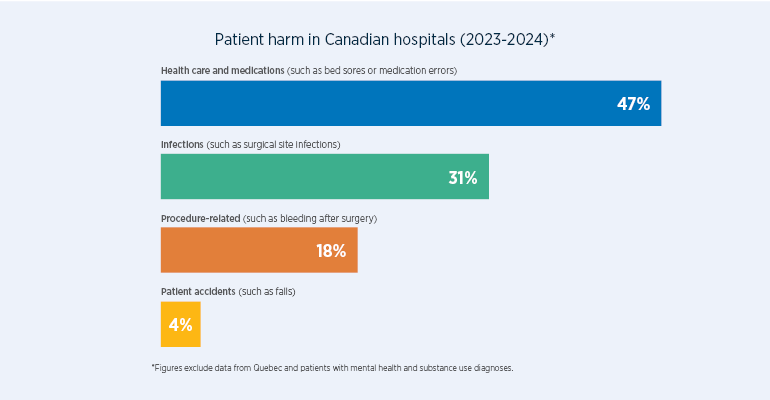
The incidence of unintended harm in Canadian hospitals has increased by over 16% from 2014-2015 to 2023-2024, with the years following 2020 contributing to more than 13% of this increase.1 Should this trend continue, it underscores the urgent need for enhanced risk management strategies and improved patient safety protocols to mitigate medical malpractice. Addressing these challenges is crucial to safeguarding patient wellbeing and maintaining trust in healthcare systems.

In 2023-2024, one out of 17 stays in Canada involved at least one harmful event.1
Emerging exposures in medical malpractice
The rise of AI
Healthcare professionals face new and evolving risks due to changes in medical practices, patient expectations and legal standards. Technological advancements involving artificial intelligence (AI) have significantly impacted the healthcare industry through optimizing patient and resource scheduling, image interpretation and improvements in diagnosis, patient monitoring and treatment planning.
However, these advancements also introduce new risks and potential sources of medical malpractice claims. Allegations of medical negligence are increasingly relevant as AI technologies are integrated into healthcare. These allegations can arise from various scenarios, including:
Misdiagnosis: AI systems used for diagnostic purposes may misinterpret medical data, leading to incorrect diagnoses. If a patient suffers as a result of relying on an AI diagnosis, this could lead to malpractice claims against healthcare providers or other types of claims against the developers of the AI.
Treatment recommendations: AI-driven treatment plans might suggest inappropriate or harmful interventions. If a healthcare provider follows AI recommendations without adequate oversight and a patient is harmed, this could be grounds for malpractice.
Algorithmic bias: AI systems can inherit biases from the data they are trained on, leading to unequal treatment outcomes for different demographic groups. If a patient experiences harm due to biased algorithms, this could lead to malpractice allegations.
As AI continues to evolve in the medical field, addressing these concerns will be crucial for ensuring patient safety and maintaining trust in healthcare systems.
Telemedicine and its potential for increased exposure to malpractice claims
Telemedicine, the remote provision of healthcare services, has gained significant popularity, especially in recent years. While telemedicine offers numerous benefits, it also presents unique challenges and potential exposure to malpractice claims. Challenges include issues related to misdiagnosis or delayed diagnosis due to limited physical examination, technical glitches and communication barriers. Healthcare professionals practicing telemedicine must adhere to the same standard of care as in-person consultations and take appropriate measures to mitigate risks.
Conclusion
As healthcare evolves with the integration of advanced technologies such as AI presenting both opportunities and challenges for healthcare workers, strategies for managing medical malpractice must also adapt to address these emerging risks. Implementing a robust risk management framework can mitigate the potential for malpractice claims, as well as protect patients. As long as medical malpractice continues to be a significant financial and reputational concern, comprehensive insurance solutions are essential.
Protect your business with medical malpractice insurance
- ENT surgeons
- General surgeons
- Gynecologists
- Neurosurgeons
- Ophthalmologists
- Orthopedic surgeons
- Plastic surgeons
- Radiologists
- Spinal surgeons
- Urologists
- Medical professional liability
- Public liability
- Professional liability
- Products liability
- Legal expense coverage