

As captured in Gallagher's Business Risk Index research, these issues are top of mind for many business leaders, with digital, economic and operational risks dominating in this year's top ten ranking. The report considers some of the trends and drivers behind the current risk landscape, as well as the steps businesses are taking to build resilience as they look ahead to 2026.
Key insights
- Global geopolitical instability and trade disputes are one of the increasing risks, impacting shipping costs, transit times and competitiveness in the Nordic region
- Due to low levels of economic growth, Nordic business owners remain focused on cost pressures in the near-term
- Businesses continue to shape their approach to cyber risks, with ransomware attacks, and digital supply chain disruptions a reminder of the present and evolving nature of the threat
The risks keeping Nordic business owners awake at night
Global trade uncertainty and supply chain volatility
According to the Gallagher Business Risk Index 2025, economic pressures remain front of mind across industry sectors. Inflation and uncertainty linked to trade are exacerbating these pressures, straining profitability and consumer spending.
As a result of ongoing disruption in global supply chains and trends such as automation and near-shoring, businesses are reassessing their dependencies, diversifying suppliers and building-in contingencies to shield them better from future volatility.
Industries such as maritime and shipping are particularly affected by these disruptions, owing to continued war risks, with diverted trade routes and economic uncertainties, resulting in increased costs and delays in the flow of goods and components.
Retail and hospitality witnessed cautious consumer spending. Manufacturing output also declined due to weakened export demand, shrinking order inflows and rising raw material costs.
Attacks targeting third-parties are a reminder of an expanding digital footprint
Amid a more uncertain geopolitical risk landscape and the rise of hybrid attacks, the region's critical infrastructure is under threat from a range of malicious actors. While digital transformation and automation are bringing new efficiencies and innovation to multiple industry sectors, they are also broadening risk exposure. These include the recent state-sponsored sabotage, cyberattacks and drone interference which have targeted critical infrastructure, causing minimal physical damage but significant business interruption.
As a result, many businesses are improving their cyber resilience by boosting security protections, training staff to better identify more sophisticated phishing attacks and ensuring they have tried and tested breach response plans in place. From a cyber insurance perspective, new entrants into the market in 2025 are introducing more capacity and a favourable pricing environment for buyers wanting to increase their level of protection.
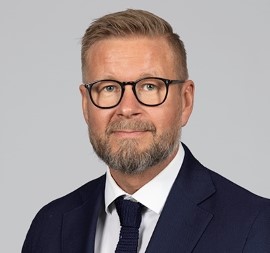
"Global challenges, from economic shifts to geopolitical tensions, are influencing the way businesses operate locally. In the Nordics, these impacts are felt across various industries, underscoring the importance of tailored risk management strategies."
Jonas Bergfeldt, CEO Gallagher Nordics
Risk management: A strategic capability for resilience
Uncertainty is reshaping business practices across the Nordics, highlighting the need for resilient strategies. To address intangible risks such as cyber and reputational risks, insurers are increasingly integrating crisis management funding and loss prevention tools into indemnity products.
Shifting client expectations, along with technological advancements, are transforming the insurance and risk management landscape. Underwriters are leveraging these advancements in the form of data-driven underwriting to deliver personalised risk solutions and pricing models tailored to specific risk profiles, rewarding effective risk management practices.
Risk management is no longer viewed as a mere cost function but as an action which defines strategic capability, fostering long-term resilience and informed decision-making going forward.
