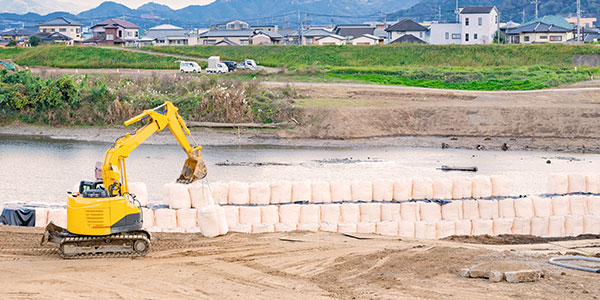
Drawing from extensive experience with projects across the Middle East, the following insights can be used to guide project owners on effectively addressing each stage of their risk mitigation strategy and ensuring that contractors have robust plans in place to manage this risk. Additionally, a strategy for demonstrating to insurers the adequacy and suitability of the controls implemented to manage these risks is provided.
Gallagher risk advisory insight
We've explored why flood risk is increasing for construction projects in the Middle East, the parts of a project that may be most exposed, and the core principles of effective flood mitigation. Now, drawing on insights from our Risk Advisory team, the following section offers practical guidance to help project owners shape a robust flood mitigation strategy.
While not intended to be fully exhaustive, the guidance highlights key areas that project teams and contractors should address to help minimise the impact of flooding throughout the project lifecycle.
Lessons learned
Often, project teams lack a corporate memory as they start anew with each project. However, individual stakeholders/project participants possess valuable insights and lessons learned from past experiences. By collectively gathering this information, identifying incidents that could potentially recur, and transforming these insights into an actionable plan, project teams can significantly enhance their flood mitigation strategies and drive continuous improvement.
- Run a workshop to identify lessons learned from previous events prior to development of flood mitigation strategy
- Improvement items to be documented and the person responsible identified
Assessment and planning
At the initial stage of the project, the focus should be on identifying the type of flood risk, where the vulnerability and exposure will be throughout the project lifecycle, the range of severity of an event, including assessment on project timelines, cost and safety.
- Identifying responsible people to implement controls and strategies will be fundamental to the success of the implementation.
- A comprehensive flood study should be completed. The project team should be aware of where the data sets are from and have checked the applicability for the project
- The project should verify that the designed protection level for the construction phase is aligned with the insurance coverage subjectivities that are being sought
- The flood risk assessment should identify specific vulnerabilities to the project site. Example, exposed trenches, diversion of existing drainage, open basement levels, tunnelling, laydown & storage (on & off site)
- Identified risks should be transferred to the project risk register and key stakeholders should be informed of residual mitigated risks
Proactive mitigation
Following the identification of the risk, the possible severity of an event and the risk appetite of the project stakeholders, consideration of suitable mitigation measures is needed.
- The construction methodology should consider the flood risk to specific aspects of the project and the timeframe for installation of permanent flood protection measures should be challenged
- If temporary flood mitigation includes mechanical evacuation (e.g. pumps), these should be on a maintenance and testing schedule. Non-mechanical flood mitigation measures should also have a maintenance and inspection schedule
- Critical long lead items should have a specific flood protection plan once they arrive on site
- The construction plan should identify a methodology to manage open ends until systems are fully completed
- Temporary flood mitigation measures should be communicated and agreed upon with project stakeholders to verify that these are in line with risk appetite and insurance coverages
Preparation and response plans
One of the most common failings seen by Gallagher specialists on construction projects is Flood Emergency Response Plans (FERP) being seen more as a tick box exercise rather than being treated as a live document that is specific and regularly updated as site conditions and exposure change.
The focus of Emergency Response plans is often focused purely on personnel safety, but does not adequately consider the protection of property and assets.
- The emergency response plan should be on a scheduled review basis based on project type (e.g. monthly, 3-monthly). The response plan should be relevant and consider specific exposures to the project
- Conduct regular training sessions and drills for workers and staff to ensure readiness. These should identify and incorporate improvement points into the FERP with responsible persons assigned
- Necessary resources such as sandbags, pumps and emergency supplies are identified in the plan and positioned for quick deployment
Monitoring and intelligence
To improve the protection plans in place for construction projects, having good forecasts and monitoring can improve the effectiveness of a site’s response to flooding.
- Weather patterns for the construction site should be monitored and communicated to the project teams
- Consideration of automated alert systems for the site. Consider levels of alert and the action plan associated with each alert level
- Conduct post-event evaluation to identify areas for improvement and incorporate lessons learned
Conclusion
By following these stages, construction projects can develop a comprehensive and adaptive risk management strategy that effectively addresses flood risks, enhances resilience, and ensures the safety and continuity of the project. Even the best-prepared business, with the most thorough FERP, isn’t immune to extreme weather events; this is where a robust flood mitigation strategy combined with suitable Insurance coverage comes into its own.
As (re)insurers are key risk partners on construction projects, it’s important that project teams not only take steps to understand and mitigate flood risk but also communicate those efforts clearly.
Gallagher’s Risk Advisory team is well placed to support project teams in reviewing their flood mitigation approach and helping them demonstrate to insurance partners how those risks are being actively managed.
Get in touch with our specialist team for further insights and a detailed review of key actions required to develop a robust flood mitigation strategy.