

Getting your Trinity Audio player ready...
Organizations today are under more pressure than ever to effectively communicate open enrollment. In the hustle to meet unmissable deadlines and issue a wave of critical messaging, teams tend to lean on the same metrics they’ve always used for expediency and benchmarking (often resulting in disappointment after they don’t bring the right types of insights).
After more than a decade of helping companies listen, measure and act on what matters, I can say with confidence: the problem isn’t the data—it’s the failure to define true campaign effectiveness in the first place.
And an open enrollment campaign is a perfect example of how capturing the right data, at the right time, can make all the difference in the world.
Why the right data matters
According to findings and insights from the global State of the Sector 2024/25 survey, the top five use cases for data identified by Communicators/respondents were:
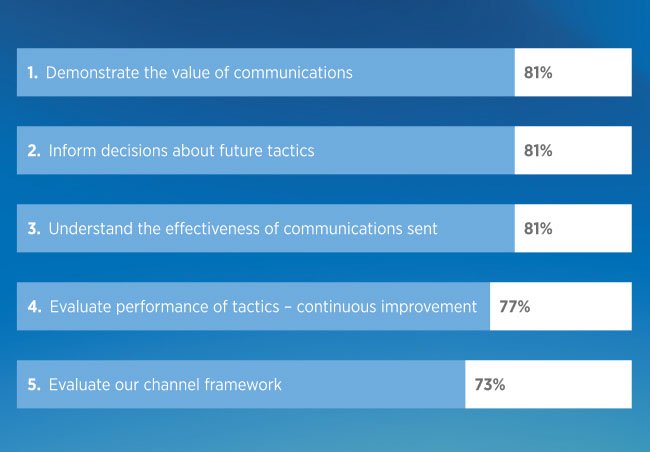
The survey found a high percentage of Communicators’ key performance indicators (KPIs) are being shared with other departments, including Human Resources and the C-suite, and that the use of data to effectively communicate success indicators is a key driver of strong interdepartmental relationships.
Bottom line: The ability to track, report and communicate the effectiveness and value of your work is truly a game changer.
As you approach your open enrollment season, consider these three critical questions to help plan for results measurement
1. What are the desired outcomes?
One of the most common reasons communication fails is a clear lack of definition around the following: Who is impacted and why should they care (audience / motivation)? What do they need to do (behavior)? What happens if we do nothing (the risk)? And, most critically, what does the desired outcome look like (results)?
The answers to these questions will help you define the measures that matter, as well as how and when to check in on your progress. Quite often, lagging measures take time to find (i.e., post campaign). Make sure to align with providers ahead of time to define your key metrics (e.g., service use, benefits selections). Ultimately, you want to understand whether the audience take-up of services increased or was below expectations—this is your outcome and what leaders will want to understand.
Also, outcomes should be grouped into the campaign phases. Maybe the initial phase is awareness and education (i.e., ahead of the enrollment window opening). What are the desired outcomes for this phase? Is it that employees know key dates, have added calendar reminders, and/or have revisited their previous year’s decisions? How might you measure if this has been done? Perhaps it’s simple checklists, or that meetings have been set up with the benefits review support teams? Being clear on each phase’s outcomes will help drive the measurement of targeted activity.
2. How do you know when your communication is working?
I’m often asked, “What’s a good open rate?”, as this is a common data point used in measuring a campaign’s progress. Common, indeed, but not sufficiently insightful. In a connected, end-to-end campaign, email is only part of the story. An email can measure volume or activity, but it can’t measure impact.
Appreciating the journey doesn’t end when people open an email is crucial in building a chain of events that drive success. All your communication outputs (e.g., emails, posters, videos, town halls) are leading measures. Such measures show awareness, and based on the phased approach outlined above, what actions should follow that awareness? This is what we want to measure. Leading measures have their purpose because if people aren’t attending workshops, talks or opening emails, then maybe your content is not hitting the spot.
At Gallagher, we draw a clear line between outputs and outcomes: outputs are what you do (e.g., open rates, volume, cadence); outcomes are what you shift (e.g., how people think, feel, and behave as a result of what you’ve communicated). It’s important to measure both to gain a rounded understanding of the effectiveness of your messaging and channels. Emails, posters, videos, and in-person meetings are all important outputs, but what follows? What is the behavior that shows progress toward the desired outcome (e.g. sign-ups, service use, benefits selections)? And how do you know if these are the right ones for your audience?
By having a defined view of your audience and how you believe their choices to be beneficial, you can consider an end-to-end employee journey with several touchpoints, e.g., meeting attendance, platform sign-up, and ultimately a benefits selection made. During the post campaign wrap-up phase, you can use segmentation to understand whether choices were made as you anticipated. That said, during the campaign cycle, certain leading measures like meeting attendance and email opens can indeed indicate whether your activity is driving employees toward the desired journey. Just don’t forget that the end call to action is the best way to evaluate the ultimate success of your campaign.
3. Are we listening, or just telling?
Effective employee listening is one of the best ways to measure communication effectiveness and gain insights that go well beyond outputs. Employee listening builds on surveys to gather more in-depth feedback, sentiment, and find new areas of opportunity.
These protocols don’t need to be complex or timely. To be effective, employee listening requires a mixed-methods approach, blending quantitative data with real human insight from focus groups, conversations, and platform analytics to truly understand the needs of team members as they approach enrollment decisions. Using pre- and post-campaign methods of checking in with your audience will help shape your communications.
Effective listening can provide you with critical insights. For example, are people confused by complex medical options? Are their decisions based predominantly on costs? You may find out that general awareness of your open enrollment window is low, or that the platform is perceived as clunky. Understanding potential barriers will help drive the right content to support employees, giving them the confidence that they’re making the right decisions for themselves and their families.
Overall, insights gained from employee listening can be game-changing, as they can help generate ideas for tailored communication. And sharing the right messaging, at the right time, to the right audience is what will encourage employees to complete the actions you set for your campaign outcomes.
Let outcomes—not just outputs—be your North Star. And if you need a partner to help define success and measure what truly moves people, Gallagher is here to help.