Author: Ajit Horra
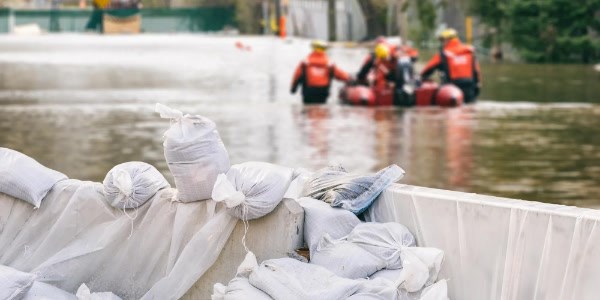
India’s climate landscape is shifting fast. With more frequent flash floods in Uttarakhand, prolonged heatwaves in Gujarat, and erratic rainfall patterns disrupting agriculture, the climate crisis has evolved from an environmental issue into a business continuity challenge. Today, it’s not a matter of whether your business will be affected — but when. The discussions are moving towards early warning and fast response.
As the CEO of Gallagher in India, I believe climate risk is no longer an ‘externality’ to insure against; it is a central driver of enterprise risk and economic resilience. It demands a bold, data-led and globally informed risk management and insurance response. How early can you be warned and how quickly can you respond?
Climate risk: India under pressure
According to a recent Council on Energy, Environment and Water (CEEW) report, over 76% of India’s population now lives in districts vulnerable to extreme heat. Gujarat is particularly exposed, with 97% of its districts falling into high or very-high heat risk zones1.
In Kolkata, citizens are now purchasing India’s first climate insurance policies covering heat, heavy rain and cold triggers2. Meanwhile, parametric insurance pilots in Nagaland have triggered state-level payouts for extreme rainfall, proving the rising relevance of non-traditional insurance in India’s climate-vulnerable geographies3.
This is not the future. It is already happening.
Climate risk is no longer an environmental issue, but it’s an enterprise risk. At Gallagher, we believe insurance must evolve from being a post-event compensator to a strategic partner in resilience. The future of business continuity in India will depend on how boldly we reimagine risk.
- Ajit Singh Horra, CEO, Gallagher
Indian insurance market: A climate awakening
India’s non-life insurance sector recorded 5.7% growth in FY2024, and projections for 2025 indicate even sharper growth, driven by climate-linked awareness and digitisation4.
The global parametric insurance market is expected to exceed $35 billion by 2029, growing at a CAGR of 16%. In India, it remains niche but rapidly growing, covering workers, infrastructure and climate-vulnerable zones5.
Parametric insurance: Innovation with impact
In parametric insurance, claim payouts are based on an agreed parameter/trigger (e.g., temperature > 42°C), rather than proof of physical damage. It’s already showing success in India:
- Digit Insurance issued heat-based payouts to workers in Noida for ₹3,000 each
- SEWA is exploring climate-linked insurance for women workers in Ahmedabad’s unorganized sector
- In Nagaland, the entire state received a parametric payout for extreme rainfall, without the usual claims processing delay
- In Kolkata, over 600 people opted for heat/cold/rain parametric coverage
As climate extremes rise, the way we insure must transform. Parametric insurance is not just an innovation; it’s a necessity. From protecting daily-wage workers to de-risking critical infrastructure, we’re building future-ready, data-driven solutions that deliver fast, fair, and efficient coverage.
- Ajit Singh Horra, CEO, Gallagher.
Gallagher’s technical playbook
At Gallagher, we approach climate risk with a structured, consultative and technically rigorous model:
- Catastrophe Modelling
- Client-Specific Trigger Design
- Boardroom Advisory
- Rapid Claims and Automation
We believe the future of insurance is not just about premium placement; it’s about strategic foresight and systemic resilience.
Global insights, local execution
Globally, Gallagher has developed pioneering parametric and ESG-linked insurance frameworks:
- In California, wildfire-linked parametric models for municipalities.
- In the UK, parametric overlays for carbon-credit investing.
- In Bangladesh, joint initiatives with reinsurance partners to protect coastal micro-enterprises from climate shocks.
In India, we are now adapting these models for:
- Heat-linked productivity risk (labor-intensive industries).
- Climate-contingent delay risk (real estate and EPC projects).
- ESG-performance insurance (green infrastructure investors).
Questions CEOs and risk leaders must ask
Climate risk is not just a technical concern; it’s a strategic priority. Every CXO team should be asking:
- Are we mapping our geographic exposure to district-level climate vulnerability?
- Is climate risk part of our board’s annual enterprise risk review?
- What are we doing to become climate resilient?
- Are we exploring parametric alternatives for high-frequency, low-severity losses?
- Do our insurance policies protect only physical assets or also business continuity?
Research and India-specific innovation
Gallagher is committed to driving climate resilience through research and pilot innovation. We are currently:
- Partnering with NGOs and academia to build India-specific climate triggers
- Exploring urban flood pools for metros with outdated drainage systems
- Designing MSME-level parametric bundles for agri-tech and solar startups
- Mapping labour impact from climate events for insurance-linked productivity cover
We believe this is the next chapter in risk innovation — and Gallagher will lead it.
The Gallagher way: Doing the right thing, always
Gallagher’s global tenets emphasize:
- Client-first consulting backed by data.
- Advisory-driven insurance broking, not transactional sales.
- Global expertise tailored for local markets.
India’s climate vulnerability makes these tenets not just aspirational—but urgent.
We must move:
- From payouts to preparedness.
- From reactive protection to proactive risk management.
- From coverage to continuity.
Final word: Climate risk is risk, Period
Monsoon isn’t what it used to be. Neither is the insurance that protects against its fallout. Today’s leaders must recognise that climate volatility is both an operational and reputational risk. Risk management and insurance must evolve to meet it.
At Gallagher India, we are building tools, products and partnerships that will help businesses not only survive but thrive — in a world of climate complexity. We are always looking to ‘help our clients face their future with confidence.’
Let’s not wait for the next heatwave, flood or cyclone to act. The future of risk starts now.