

Key insights
- Medical benefit costs continue to rise, but employee engagement and health outcomes aren't improving.
- Employers are thinking differently about health and wellbeing amid changing workforce demographics and expectations.
- A holistic approach focuses on the "whole person" and their physical, mental, social and financial needs.
- Demonstrating return on investment (ROI) requires expanding traditional metrics and recognizing wellbeing as a strategic asset, not a cost center.
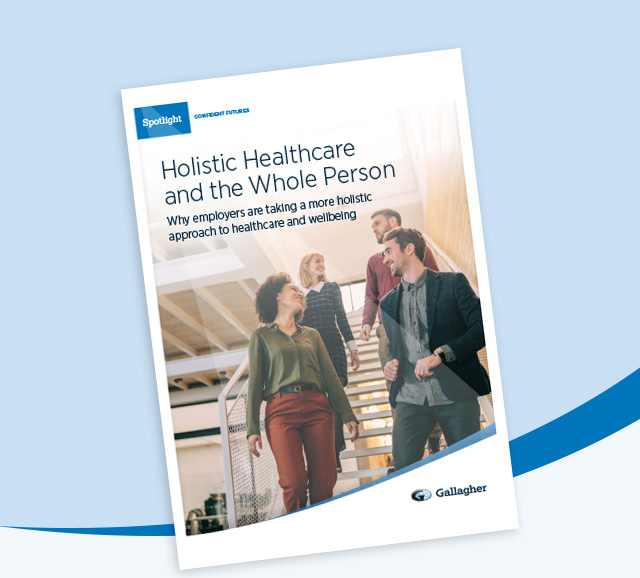
Almost everyone has felt burned out at some point in their career: their mind constantly reshuffling priorities, pressures at home and at work, and the feeling that there are mountains to climb daily. Add poor physical health, financial worries and/or loneliness into the mix, and it's inevitable that wellbeing will wane.
Employers know that stress, depression and anxiety cost USD1 trillion1 in lost productivity each year, and they're walking a fine line: caring for employees without crossing the line. So, how can employers make a meaningful difference to workforce health and wellbeing while retaining trust and feeling the benefits?
Leading organizations have made emotional wellbeing their top investment priority in 2025, acknowledging the urgent need to address the effects of stress factors on individuals and its impact on organizational resilience.
Part of the answer lies in adopting a holistic approach to healthcare and wellbeing. This approach involves seeing health through a wider lens and recognizing it as a system in which physical, mental, social and financial health are interdependent.
