As events during the past 12 months have demonstrated, every season is now bushfire season, and fires in urban areas are an increasingly growing concern for communities, businesses and insurers alike.
Getting your Trinity Audio player ready...

Key insights

  • The concept of a "bushfire season" has been turned on its head, with Australian, Asian and western North American fire seasons increasingly overlapping.
  • Recent events highlight increasing urban exposures, as climate change and property development put more areas at risk.
  • Bushfires have multiple business impacts. Beyond the direct threat, secondary impacts include business interruption, supply chain disruption, loss of tourism income and the human health impacts related to smoke particles and air pollution.
  • Some of the most catastrophic blazes in recent times have been attributed to power lines, while extreme heat and bushfires can impact grid stability, leading to blackouts.
  • Just as communities threatened by bushfires are implementing resilience measures, businesses need to explore mitigation strategies to better protect their people and property.

Rise of the all-season bushfire hazard

Bushfires in the northern hemisphere during winter and spring 2025 suggest a changing dynamic where highly destructive bushfires can occur in any season of the year, not just in the hottest summer months.

As a result, the fire seasons in Australia and western North America are increasingly overlapping, according to researchers from the Helmholtz Centre for Environmental Research (UFZ)1.

In January 2025, California experienced significant devastation from intense and fast-moving bushfires in and around Los Angeles. The deadly blazes claimed around 30 lives, destroyed over 18,000 properties and burned over 56,834 acres (23,000 hectares).

In March 2025, a series of fires in the southeastern and central parts of South Korea claimed 32 lives and destroyed up to 5,000 properties, burning 256,989 acres (104,000 hectares) in just one week. An attribution study suggested the events that occurred were twice as likely — and 15% more intense — because of climate change2.

The combination of global warming, changing land use and urbanisation is causing more severe losses in regions around the world, even in cooler months.

"Seeing such significant fires during winter is certainly abnormal," says Chief Science Officer Steve Bowen, Gallagher Re. "We're facing a new reality regarding the seasonality of bushfires."

With traditional markers for bushfire seasons becoming less applicable, communities must address bushfires as a year-round risk. The evolving nature of the threat, with events increasing in frequency and severity, has resulted in larger economic losses.

The impact on insurability directly impacts property owners seeking bushfire coverage. Five years after the major Black Summer bushfire events in Australia, insurers are continuing to reassess how much capacity they're willing to deploy in high-risk areas, making it more challenging for property owners to obtain the coverage they need at affordable rates.

We're facing a new reality regarding the seasonality of bushfires.
Steve Bowen, chief science officer, Gallagher Re

Beyond direct losses: The rising secondary impacts of bushfires

The direct financial impact of such events on businesses and communities is significant, but there are also secondary impacts. These impacts include loss of attraction for tourism and hospitality businesses and prolonged business disruption for agricultural industries due to the impact on crops and livestock.

Meanwhile, power utilities face the prospect of physical damage to infrastructure, as well as potential liability for ignitions their equipment cause. Extreme heat and smoke also affect the stability of the grid and the ability of solar panels to generate power, potentially causing blackouts.

For businesses and communities, power outages disrupt daily operations. Investing in backup solutions can help mitigate the impact on business continuity.

Another ongoing concern in many cities is air pollution, with bushfires degrading overall air quality. Smoke from the fires in the 2019-2020 bushfire season was more deadly than the fires themselves, according to research, with Sydney and Canberra recording their worst-ever air quality3.

As both the frequency and severity of bushfires escalate, the extended impacts across society underscore the need for comprehensive strategies to mitigate risks and enhance recovery efforts.

Addressing these challenges requires understanding the root causes of bushfire losses and collaborating across sectors to develop innovative solutions that safeguard communities and businesses.

Climate change and urban sprawl: Key drivers of bushfire loss

Weather whiplash

Weather whiplash describes the phenomenon whereby very wet periods, which promote rapid vegetation growth, are followed by very dry periods. This growth increases the amount of dry vegetation available to fuel the spread of the fire.

Masses of dry vegetation, combined with strong winds, allow bushfires to spread quickly — up to 20 mph in optimal conditions. Sloping terrain also plays a factor, with fires tending to spread uphill.

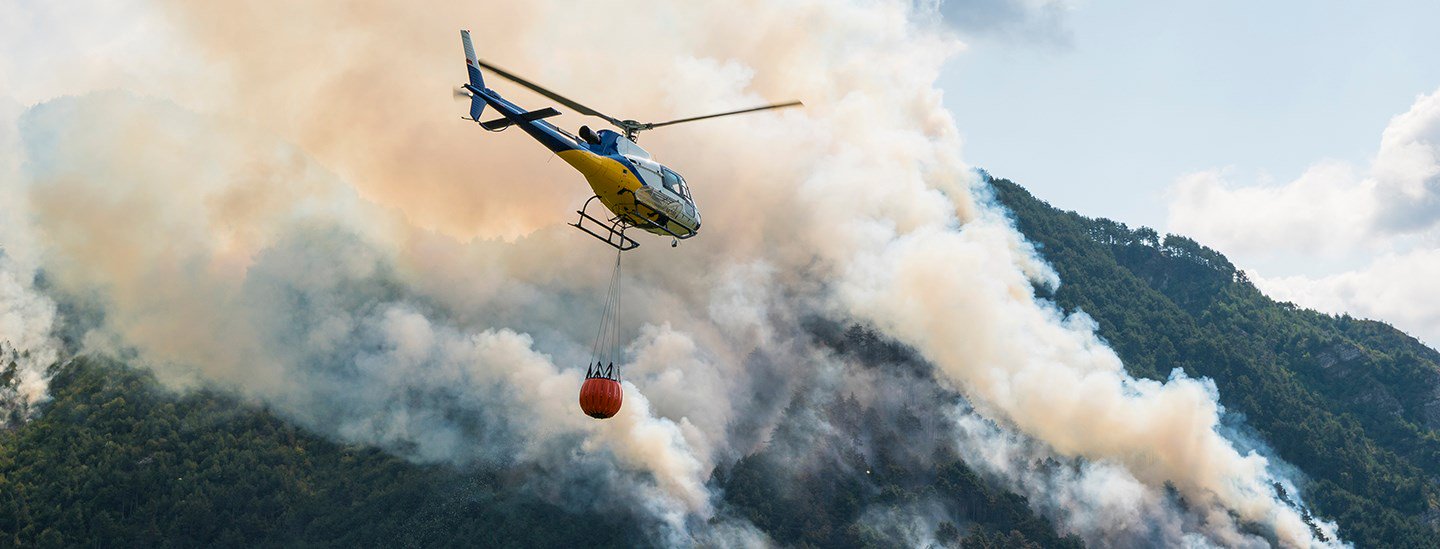
Swings in weather and precipitation patterns, exacerbated by the El Nino Southern Oscillation (ENSO) climatic cycle, with longer, hotter and drier seasons, increase bushfire risk in South and Southeast Asia, Central America, Northern South America and Australia.

Wildland-urban interface

While fire remains a significant threat for rural areas, urban fires are also rising considerably due to the impact of urbanisation and more frequent and severe bushfires.

As witnessed in Canberra in 2003 and again in 20204, fires that begin in wildland-urban interface (WUI) — where urban development and wilderness mingle — are crossing over into urban areas, impacting entire communities in the process.

"We're essentially racing against the hazard," says Ian Giammanco, managing director of Standards and Data Analytics at the Insurance Institute for Business & Home Security (IBHS) in the US. "Some of the issues we're facing have developed over multiple generations."

As bushfire claims rise, insurers aim for better risk assessment

Insurance providers' appetite for catastrophe risk has been more constrained in recent years, leading to higher pricing. This pricing, combined with shifting reinsurer appetite and the impact of inflation on claims and reconstruction, has driven affordability and availability challenges.

Underwriters are taking steps to better control their bushfire exposure by seeking more detailed, granular property risk information based on construction, occupancy, protection measures and exposure levels.

Insurers increasingly turn to third-party risk scoring tools to assess, price and manage bushfire exposures. However, catastrophe modelling for bushfire risks is in its relative infancy, and insurers will take time to fully embrace modelled outputs when determining risk-based pricing.

Improving resistance to bushfires at a property and community level

Typical measures to improve a building's bushfire resilience — often referred to as "home hardening" — include using fire-resistant roofing materials such as clay tiles; replacing flammable siding with stucco, brick or concrete; creating a minimum five-foot defensible perimeter; clearing brush around the property; and removing wooden fences close to buildings.

The IBHS "bushfire-prepared home" concept outlines a base-level standard for bushfire-resistant construction.

"Resiliency for bushfire-prepared neighbourhoods and homes should be pushed to a medium level to gain some benefits, but it's important to recognise that you need to meet a specific threshold, " says Faraz Hedayati, lead research engineer at IBHS. "You cannot simply pick and choose which mitigation measures to implement."

Role of community planning in bushfire resilience

Land management and intentional use of fire play crucial roles in bushfire management. Controlled burns set by firefighters can aid bushfire suppression by clearing brush and reducing the available fuel load for unexpected ignitions.

As more people move into the WUI, however, authorities are looking more closely at where properties are being built and prioritising community planning with bushfire risk in mind. Rebuilding properties in accordance with contemporary codes should make communities more resilient in the future.

High-risk areas will continue to pose a challenge. While urban centres have highly skilled and trained firefighters, other parts of the country rely heavily on volunteer firefighters.

With the bushfire threat increasing outside of the traditional season and regions, these rural fire services could face extreme events that they lack the personnel and training to properly combat.

"With heavy fire damage also observed in parts of Europe, Asia and Australia recently, this calls for a global response and collaboration to enhance fire suppression efforts," says Gallagher Re's Steve Bowen.

Business and commercial building preparedness can mitigate bushfire risks

Just as communities threatened by bushfires are implementing resilience measures, businesses need to explore what mitigations are required to protect their bottom line against property and business interruption losses.
These mitigations include proactive fuel management, such as clearing undergrowth, trimming and thinning trees, creating a defensive space around properties and integrating fire-resistant building materials into roofing and cladding. In addition, maintaining roads and other access routes enables emergency services to access affected areas more easily.
Improving the resilience of larger commercial spaces, like big-box retailers or manufacturing facilities, can be more complex. According to IBHS's Hedayati, they often have specific vulnerabilities, such as vehicle loading docks, which can allow fire embers to enter the building without proper mitigation, and large windows, which are more likely to fail under extreme temperatures.
Additionally, commercial buildings typically have trucks and cars parked nearby, which can increase the risk of ignition for structures, exacerbated by EVs and EV charging units.
For all businesses, regular education and awareness programs on fire safety and up-to-date emergency plans, including details of evacuation routes, assembly points and communication channels, are essential to keep employees safe.
Businesses should also test their continuity plans regularly, including emergency drills and close coordination with local fire departments to enhance the response time for tackling bushfire threats.
Collaboration among public and private actors and guided preparedness can benefit resilience building across sectors. Adequate and timely fire risk assessments can lead to a more efficient allocation of resources before, during and after bushfires, as well as more efficient mitigation measures that can drive losses down in time.
Communities, businesses and individuals can all contribute to building safer environments with individual actions, but strategic planning from experts can make a larger-scale difference. The insurance industry continues to play a crucial role, through insights, resources and expertise as it partners with clients in the public and private sectors to build resilience against bushfires.
"Engaging with local communities to promote sustainable land management and raising awareness about the consequences of our actions can make a significant difference. Let's remain hopeful and proactive," says Bowen.
"By working together to address these challenges, we can protect our environment and pave the way for positive change to ensure that we safeguard our planet for future generations."

connect with us