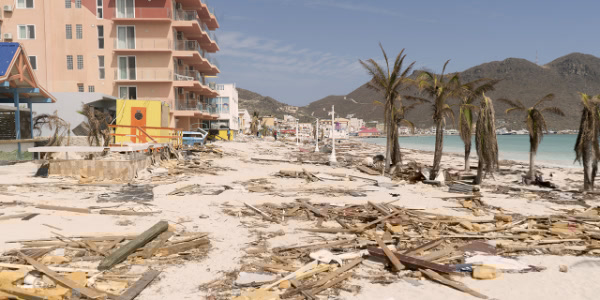
Twenty years after Hurricane Katrina struck New Orleans, its impact remains deeply felt across the affected communities. As the costliest and one of the five deadliest hurricanes in US history, Katrina made landfall near Buras, Louisiana, on August 29, 2005, as a Category 3 storm with a 28-foot storm surge.
When the city's flood defenses gave way, 80% of the city was left underwater for over a month, causing a trail of devastation. At least 1,300 individuals died because of the event, and over 400,000 residents were forced to flee from the city and its surrounding areas, some of them never to return.
With damages exceeding USD200 billion, Katrina not only altered the city's physical landscape but also reshaped global perspectives on disaster preparedness and response.
Despite the passage of two decades, the emotional impact remains vivid for those who experienced the storm firsthand.
In this interview, Nancy Sylvester, area executive vice president at Gallagher, offers a personal account of her experiences during Katrina and provides insight into the enduring recovery efforts in New Orleans and her city of Baton Rouge.
Q: As the 20th anniversary of Hurricane Katrina approaches, an event you experienced firsthand, it must feel in some ways like it has been no time at all.
Katrina was such a defining moment; I don't have the right words to express how it impacted us physically, emotionally and economically. Whenever people talk about Hurricane Katrina, it often brings back difficult memories, and you see how it affected everyone in the way we react.
Q: Can you take us back to August of 2005? How did you experience the landfall of the Hurricane?
I live in Baton Rouge, 70 miles from New Orleans. After a weekend with friends, the news reports showed how the storm was unfolding, and I remember standing in my driveway thinking, "This doesn't look good."
That weekend, my oldest son was fishing in the Gulf of Mexico, and when we urged him to come back inland, what should have been an hour's drive took about 12 hours due to the worsening conditions. The news reports initially said things were under control, but by lunchtime on Monday, the levees began breaking, and things quickly spiraled out of control.
Q: How do you recall those first days when family and friends sought shelter at your home, far from the most affected areas?
I welcomed my family from New Orleans, expecting it to be manageable, but soon found myself hosting 26 people. I slept under my dining room table, the only private space left. Wandering into the kitchen at night, I'd meet strangers saying, "I work for your cousin. He said it would be OK." I reassured everyone, "Yeah, everything's fine."
Someone staying with us allowed their 20-year-old son to ride out the storm in New Orleans. Alone in his neighborhood, he recorded videos of houses being blown away. We heard nothing of him for days until he found a phone across the state and called to say, "I'm alive."
A relative of mine recovering from open-heart surgery had to stay in New Orleans as the storm intensified. The airport became a makeshift emergency room with a triage set up in the baggage claim area. Sadly, my relative died there in the airport without access to proper help.
Q: How was daily life impacted in the aftermath of Hurricane Katrina?
My usual 15-minute drive to the office would take hours due to the crowds seeking refuge in Baton Rouge and just trying to get somewhere else. Schools also faced a sudden surge in students, and the school offices would announce where people could find food.
Blackhawk helicopters were constantly flying overhead, transporting the injured from New Orleans to Louisiana State University (LSU), where the athletics department became a makeshift emergency hospital. The LSU student body even donated clothing to those in need, and you could see people wearing purple and gold, the colors of the university. It was a touching display of humanity after Hurricane Katrina, with everyone welcomed and cared for as best as possible.
As time passed and exhaustion set in, the initial support and warmth waned somewhat, and the struggle for basic necessities, like bread, became overwhelming.
Q: Infrastructure deficiencies greatly exacerbated the impact of Katrina. How has the local infrastructure evolved since then?
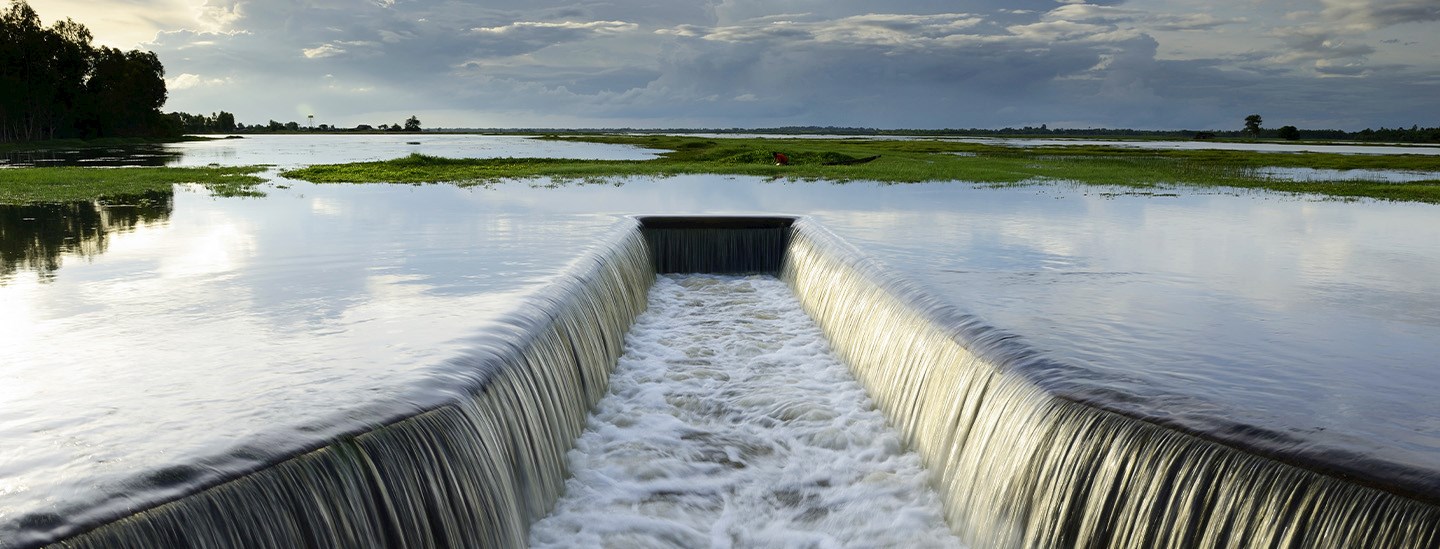
The levee failures were a major issue, but the Mississippi River Gulf Outlet (MRGO) also played a significant role in how the city flooded. Built in 1968 to make boat transit from the Gulf of Mexico to New Orleans easier, it allowed massive water inflow into the city.
Shortly after Katrina, a local newspaper revealed that an engineer had warned years earlier about the risks of MRGO, predicting the city would eventually suffer. How true that prediction turned out to be.
After Katrina, the Army Corps of Engineers launched its largest financial project ever — at a cost of nearly USD17 billion — to upgrade and strengthen the flood levees. This groundbreaking project has successfully contained every storm since.
Q: How have your clients' perspectives on extreme weather risks evolved since Hurricane Katrina?
Before Katrina, redundancies were often viewed as unnecessary expenses. Today, having backups is understood as essential. Clients now prioritize strengthening buildings to ensure their facilities can endure severe weather, addressing all potential exposures on supply chains or backup power, for example. Everyone is focused on preventing business interruption claims and avoiding closing their doors because, once they do, they may never open again. We know that FEMA [Federal Emergency Management Agency] has stated 40% of companies don't reopen after a disaster, and another 25% fail within one year.
As a community, we're also massively investing in roof resilience to withstand strong winds and prevent piercings. When damage or loss occurs, my clients aren't interested in just rebuilding what was there before; they're focused on constructing to newer codes and following the highest building standards.
Q: Can you provide an example of New Orleans' efforts to rebuild stronger and more resilient after Hurricane Katrina?
When I think about a strong example of resilience in the reconstruction, I immediately think of the post-Katrina University Medical Center (UMC), which replaced the old Charity Hospital. The hospital was re-engineered with a wind- and stormproof design and innovative features to improve safety and resilience, all backed up by data.
During Hurricane Ida, a massive bolt came loose and battered one of the large windows and, remarkably, the building held up and suffered no damage. The driving philosophy behind UMC is never to shut down again. Now, there's no longer a need to position people in the airport luggage area, waiting for a Blackhawk helicopter to come and rescue them.
The community is choosing not to rebuild as it was but to create a better and more effective system, and it's clear that this approach is working.