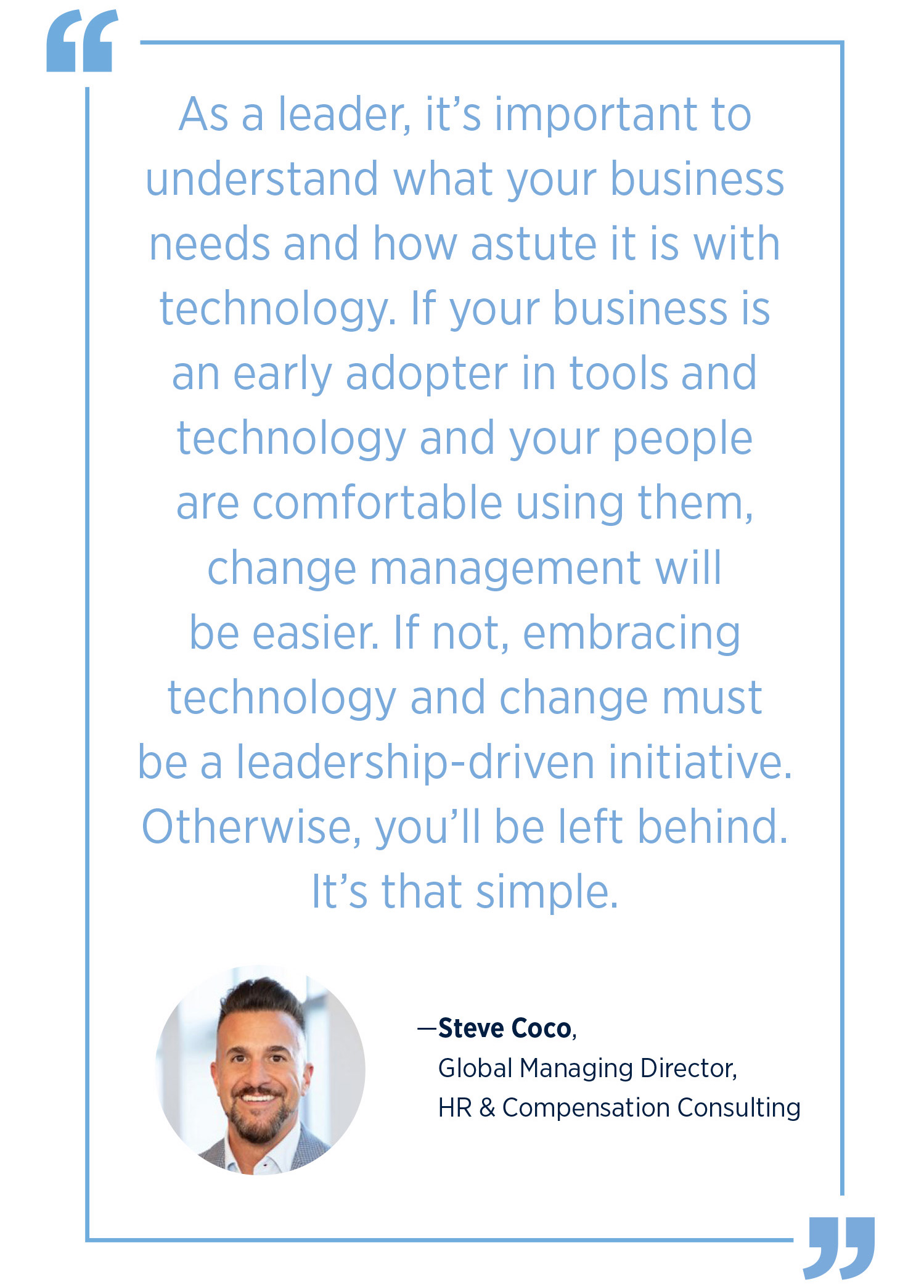
Technology is the primary enabler of work across all roles and industries. Digital proficiency is fundamental for workplace success. Poor technology experiences directly impact employee satisfaction, productivity and retention. This trend is accelerating as generative artificial intelligence (AI) becomes integrated into work processes.
Generative AI (GenAI) has already achieved critical mass since the first platform became publicly available in November 2022, at a much faster rate than any other transformative technology, including smartphones and tablets1. Organisations are moving quickly and prudently in this rapidly evolving environment to integrate AI and remain competitive, but challenges to adoption and barriers to entry remain an issue for many firms.
The risks and implications of GenAI
GenAI creates original content in response to a prompt. It relies on deep learning models — sophisticated algorithms that simulate the learning and decision-making processes of the human brain. These models identify and encode the patterns and relationships in massive amounts of data and then use that information to understand users' queries and respond with relevant new content2.
AI is becoming more broadly embedded at work through GenAI platforms and business applications like CRMs that incorporate advanced AI capabilities. Early adopters have demonstrated the practical benefits of using AI in the workplace, from speeding the development of innovative new products and services to enhancing HR teams' ability to support talent recruitment, development and retention. AI-enabled digital transformation will continue to expand as the technology becomes increasingly powerful and organisations become more adept at deploying it to solve problems.
Yet despite the technology's significant capabilities, most employers are lagging behind in their approach to managing the associated opportunities and risks. Globally, only 29% of employers say their organisations offer guidance on when, where and/or how to use AI. Only one in five said their organisation provided AI training or resources, and half reported that no one was assigned responsibility for AI within their organisation3.
The nonlinear pattern of adoption is typical of transformative technologies. Organisations that wait for proof of impact will lag in the market as competitors, suppliers and customers scale the learning curve faster and innovate around them.
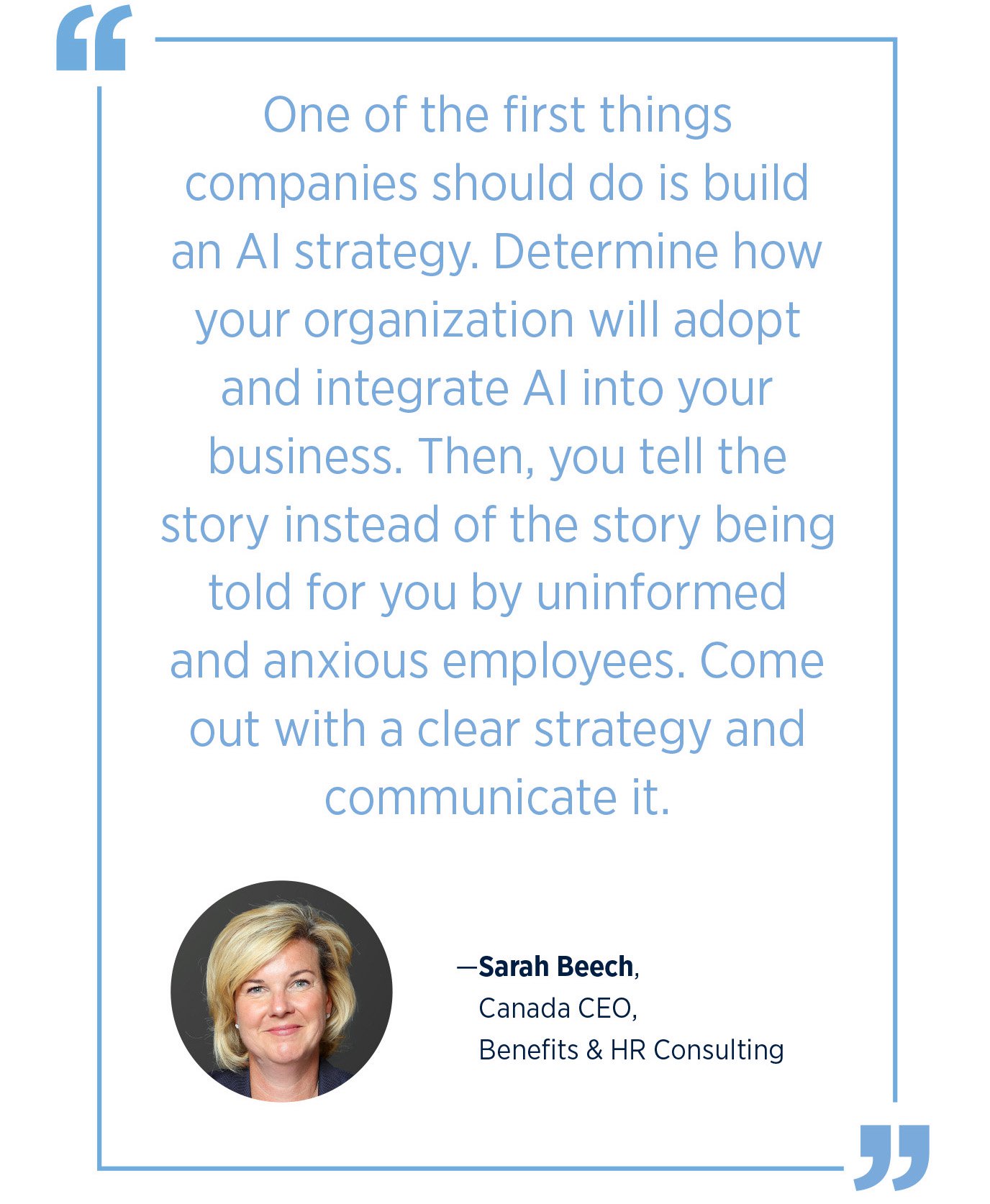
Organisations that are slow to integrate AI capabilities are leaving their employees in the dark about what direction they plan to move in with the new technology. This can create uncertainty and anxiety in the workforce, with staff feeling concerned that AI will replace or make their jobs obsolete and feeling overwhelmed with the need to keep up with changing technology. Such a mindset can hinder the rate and success of adoption.
Even if leadership ignores or underplays the AI-driven digital transformation, the reality is that employees are likely to still use AI in the workplace. Although increased familiarity with AI may provide an advantage, it also creates significant risks for the organisation. Unguided and unsupervised, workers risk exposing sensitive information or relying on misinformation for decision-making.
Leadership’s role in AI integration
Leadership’s role in AI integration is to define the strategy, set and communicate guardrails, champion initiatives, and educate their workforce. The goal should be to accelerate the organisation’s progress in the digital transformation endeavour faster than current and future competitors while helping to ensure the appropriate, safe and ethical use of the technology.