
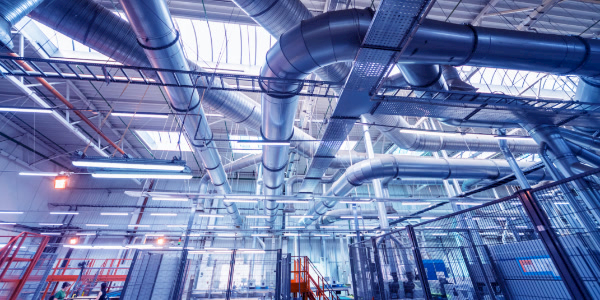
Most studies, discussions and research have focused on outdoor air pollution. However, research shows that pollutant concentration levels are often two to five times higher inside the house than outdoors, a matter of serious concern considering that, on average, individuals spend 70%-90% of their time indoors1. As indoor air pollution can significantly impact our physical and mental wellbeing, it is important to understand how we can improve the air we breathe indoors.
IAQ and its hidden costs
Poor IAQ poses several health risks. Its short-term impacts can include headaches, dizziness and fatigue, as well as eye, nose and throat irritation, whilst continued exposure can lead to chronic respiratory conditions, heart disease and even cancer. Poor IAQ has also been linked to cognitive decline and weakened immune response.
Beyond physical health, indoor air pollution can lower productivity in schools and workplaces, leading to more absences and dropping morale. There are direct financial costs, too. If heating, ventilation and air conditioning (HVAC) systems are working harder to filter pollutants, building maintenance costs will rise. Mould and damp issues stemming from a lack of proper ventilation can damage property and lower its value.
Overall, ignoring IAQ weakens health and financial stability in homes and businesses.
Key benefits of IAQ systems
IAQ systems are designed to enhance air quality through several key components. They utilise filtration to remove dust, pollen, odours, and other airborne contaminants, while proper ventilation ensures the dilution of indoor pollutants by introducing fresh outdoor air. These systems can seamlessly integrate with HVAC systems to automatically adjust ventilation, temperature, and humidity levels based on real-time data.
Besides its many health advantages, IAQ systems offer a variety of economic and regulatory benefits:
- Environmental compliance benefits — Lower energy consumption and reduced carbon emissions can help meet carbon neutrality goals and comply with regulations such as the UK’s Building Regulations 2010 (and 2022 Part L) while also qualifying for carbon offset incentives.
- Better asset protection and financial gains — In addition to promoting energy savings and reduced operating costs, IAQ systems prevent damage to building infrastructure.
- Human and risk management benefits — Utilising an IAQ system contributes to fewer sick days and improved cognitive performance, reducing healthcare costs and employer liability.
Case study: The PRS solution — Clean air, lower costs and safer spaces
Pathogen Reduction Solutions Limited (PRS) uses proprietary technology to deactivate airborne pathogens like bacteria, viruses and mould in HVAC systems using high-intensity UVC light. PRS is suitable for retrofits or new builds and works to reduce exposure to harmful pathogens, including SARS-CoV-2 and Influenza, by over 99.999%1.
PRS enables safe indoor air recirculation with financial and environmental benefits such as reduced energy consumption and lower carbon emissions. The system limits the need for external air intake in buildings and reduces human exposure to metropolitan pollutants like nitrogen oxides (NOx) and wildfire-related particles like carbon black.
Effects of PRS in an office building
In August 2023, PRS was installed in a London office building to test and improve indoor air quality1. The system was installed on the second floor of the 32,000 sq. ft. building. Initial results showed pathogen reductions of 97% in bacteria levels and a 93% drop in mould levels, alongside 63% and 81% decreases in total volatile organic compounds (TVOCs), respectively, at the one-day and one-week intervals with PRS operating on the second floor. A second round of testing was carried out after three months, which yielded even better results.
How IAQ systems can help across different sectors
1. National Health Service
Installing IAQ systems in hospitals and healthcare centres can potentially reduce pathogens and lower the risk of hospital-acquired infections. This technology is particularly beneficial for vulnerable patients in ICUs, oncology wards and hospital waiting areas. From a financial perspective, the NHS can benefit from the system’s energy-efficient functioning, as well as a reduction in absences due to illness.
2. Real estate
A well-ventilated and healthy internal space is a key value-add in modern buildings and can attract high-value buyers or renters. In addition, installing an energy-efficient HVAC system can help estate agents achieve their ESG goals and maintain competitiveness in the current market.
3. Construction
Sites with ongoing building work often have poor air quality. A high-quality IAQ system can help reduce dust, volatile organic compounds, and biological pollutants during and after construction. Crews can also benefit from cleaner air in closed environments, reducing days off and boosting productivity.
4. Social housing
Mould exposure can unfortunately be common in UK social housing and particularly affects residents with asthma or allergic tendencies. Installing an effective IAQ system can improve long-term living conditions. Landlords can also meet housing guidelines laid out by the Decent Homes Standard, ensuring that essential quality and safety benchmarks are adhered to. This not only satisfies legal requirements but also boosts tenant satisfaction and increases property value.
Why focus on IAQ now?
With numerous and overlapping global environmental challenges, such as decarbonisation, heat stress, public health and energy security, IAQ is an area that has often been overlooked. However, the health hazards of poor AQI are real. Household air pollution was responsible for an estimated 3.2 million deaths globally per year in 2020, including over 237,000 deaths of children under the age of five2.
In the UK, the Clean Air Programme (2019-2025) — a £42.5 million research initiative — uses innovative science to tackle air pollution. Additionally, the government’s Air Quality Grant Scheme helps local authorities make air quality improvements and meet their statutory duties under the Environment Act 1995 using practical solutions. These efforts reflect a growing recognition at a national level of IAQ’s role in broader environmental and health strategies.
In the US, programmes like ARPA-H’s BREATHE initiative are focused on stimulating private sector innovation to address IAQ, with pathogen resiliency at the forefront. The focus lies on providing funding for high-impact technologies to transform building air quality.
Conclusion
From an insurance perspective, IAQ is quickly becoming a critical concern. Poor IAQ is now linked to a range of health-related claims, including respiratory issues, long-term illnesses, and liability relating to tenant, employee or third-party complaints. As a result, both insurance premiums and risk exposure relating to IAQ factors are increasing. Insurers are starting to factor IAQ performance into risk assessments for buildings, especially in healthcare, social housing and office spaces. For instance, insurers are now considering IAQ in relation to compliance with regulations such as the Health and Safety at Work Act and the Housing Health and Safety Rating System (HHSRS). Properties that fail to meet these standards may face higher premiums due to increased risk.
With mounting pressure on UK property owners to focus on decarbonisation targets, reduce operational costs and protect occupant health, an effective IAQ system can be key in addressing these issues.
