
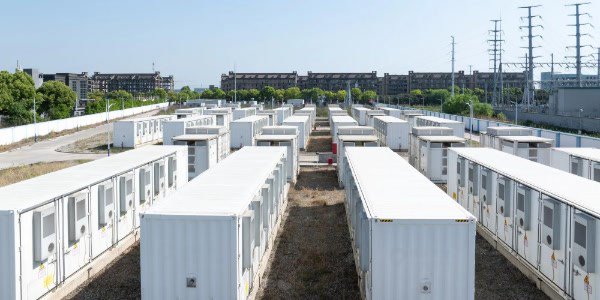
Understanding why Battery Energy Storage System (BESS) fires occur is key to preventing them. Most grid-scale storage today uses lithium-ion batteries, which pack high energy density but can fail catastrophically under certain conditions. A phenomenon called thermal runaway (TR) is the primary culprit in battery fires. Thermal runaway is a self-accelerating chain reaction where a battery cell, once overheated or damaged, releases energy that heats up neighboring cells, causing a domino effect of fire or even explosion. The triggers for such failures, or "abuse conditions," can be electrical, mechanical or thermal.
Common causes include:
- Overcharging or over-discharging: Exceeding the battery's design limits generates excessive heat.
- Short circuits (internal defects or external faults): These bypass circuits can instantly dump energy as heat.
- Physical damage: Crushing, puncturing or dropping a battery can breach internal layers and spark TR.
- Overheating from external sources: Exposure to fire or high ambient temperatures can push cells into runaway.
- Manufacturing flaws: Contaminants or faults in cell construction can lie dormant until they cause a failure.
Battery type and chemistry also influence risk. For example, lithium nickel-manganese-cobalt (NMC) cells have very high energy density but can release more heat if they fail, whereas lithium iron phosphate (LFP) cells are thermally more stable — a reason many new BESS deployments favor LFP for its safety profile.
Flow batteries and other chemistries offer alternatives with lower fire risk, though they come with different trade-offs. Gallagher's technical team stays abreast of these developments to advise you on the best-fit technology from a risk perspective.
Mitigating thermal runaway requires a multi-layered approach in BESS design and operation. Here's how five cutting-edge systems — and the Gallager Energy practice's risk engineering guidance — address the threat.
1. Battery management system
The battery management system (BMS) is the brain of the battery system, overseeing charge/discharge rates, voltages and temperatures of every cell string in real time. A BMS works to prevent unsafe conditions — for instance, it will block charging if a cell is too cold (which could cause lithium plating and failure) or cut off the circuit if overcurrent is detected. By maintaining balance and avoiding overstress on cells, the BMS is the first line of defense against thermal events.
Modern BMS units can even predict failing cells through state-of-health algorithms and take preemptive action. For risk managers, a robust BMS is a must-have; the Gallagher Energy team scrutinizes the BMS capabilities of client installations and ensures they meet best-in-class standards for monitoring, controls and fail-safe interlocks.
2. Power conversion system
The power conversion system (PCS) — inverters and associated controls — connects the BESS to the grid. Beyond converting DC battery power to AC, the PCS can isolate the battery system during anomalies. In an emergency, the PCS should rapidly de-energize and disconnect a faulted battery string or container from the grid to prevent feeding a fire or being a source of ignition itself.
We verify that clients' PCS designs include rapid shutdown functionality and protective relays that coordinate with the BMS for a swift, safe response to any battery incident.
3. Thermal management and fire suppression
Proper cooling systems — whether air or liquid — help keep batteries within safe temperatures during normal operation, reducing the chance of thermal runaway. In some BESS designs, active fire suppression (e.g., aerosol agents, sprinkler mist systems) may be installed inside the container to detect and knock own flames early.
Interestingly, Wärtsilä Corporation conducted a large-scale test that used no active suppression — the fire was allowed to burn — yet the event stayed contained.1 This test demonstrates the value of passive protections, but where appropriate, we recommend supplementary suppression and advanced detection (smoke, gas, thermal IR) to provide multiple layers of defense.
Each site is unique: Our engineers assess whether adding suppression will meaningfully reduce risk or if the focus should be on passive containment (sometimes dumping water on a high-energy lithium fires can create toxic runoff or hydrogen gas, so these decisions require expertise).
4. Robust enclosure and venting
The battery containers themselves form a critical safety barrier. Key design elements include fire-resistant walls between battery modules (to slow or prevent fire spread) and engineered venting systems. Deflagration panels, or "blow-out" panels, are built into many BESS enclosures to relieve pressure safely if there's an internal explosion or rapid gas release. Wärtsilä's test validated this concept: The panels blew out as designed, venting fire and smoke upward, which helped preserve the structure of the container and protect adjacent units.
Proper venting ensures that if a battery does rupture violently, the force is directed away from critical equipment and personnel (often upward to the sky). Gallagher pays close attention to these features in client facilities: we ask, "Where will the energy go if something goes wrong?" It's essential to ensure that there's no dangerous accumulation of explosive gas and that pressure relief paths are unimpeded.
We also emphasize simple but important details like secure door latches (to remain shut under heat, keeping fire contained) and intumescent thermal barriers between cells or racks that can slow down or stop a thermal runaway propagation.
5. Preventive maintenance and analytics
Technology alone isn't enough — a proactive maintenance and monitoring program is vital. Many battery fires have been traced to unnoticed degradation or damage. We guide clients in implementing predictive analytics (e.g., using BMS data to spot out-of-tolerance cells) and routine inspections (infrared scanning for hot spots, checking for water leaks or corrosion, etc.). By catching issues early, you can replace a faulty module before it fails. Insurers increasingly ask about maintenance protocols; we ensure our clients can demonstrate rigorous practices, which in turn can favorably influence underwriting.
In essence, a holistic safety strategy — combining good battery chemistry choices, intelligent controls (BMS/PCS), robust physical design and vigilant operations — is the recipe for minimizing fire risk. Gallagher's Energy practice excels in evaluating all these technical layers. We speak the language of battery engineers and leverage that knowledge to craft risk management plans that resonate with both plant operators and insurance underwriters.
To learn more about our Energy practice or connect with our experts, click here: Energy Industry Insurance | AJG United States
