Author: Chris Crawford

Gallagher analysts examined energy industry CEO pay trends based on compensation data from 183 publicly traded companies that filed either a DEF14A or a 10-K filing as of June 4, 2025.
The team omitted from the analysis 43 companies that didn't pay their CEO in the last fiscal year or didn't employ a compensated principal executive.
The analysis covered all energy industry segments, split as shown.
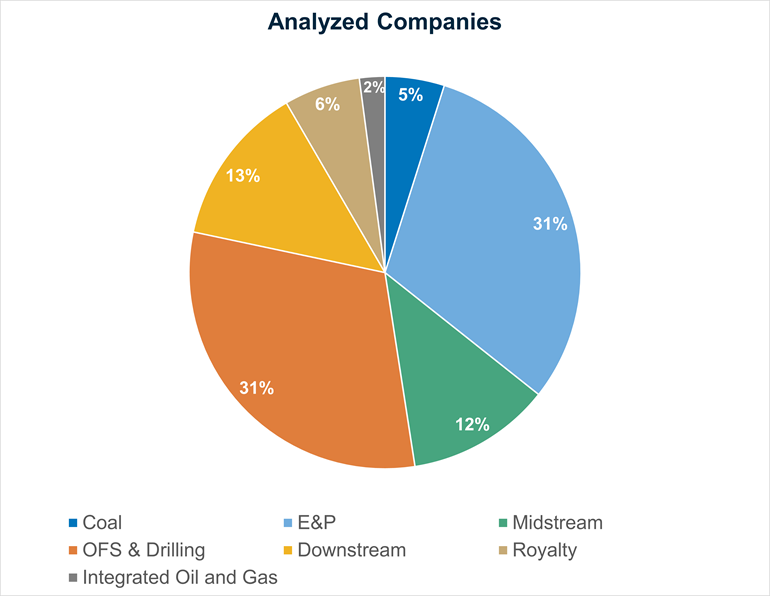
FY2024 revenues of less than $1B represented almost 48%; the remainder ranged from $1.1B to $339.2B.
The median revenue rose to $1.159B, climbing 2% over the prior year.
Energy CEO compensation trends
Gallagher analysts noted the following trends in CEO pay from FY2024:
- CEO pay across all companies ranged from $2.9M at the 25th percentile, up to $10.4M at the 75th percentile — reflecting a median increase of 8% over FY2023.
- As expected, given its size and operational complexity, the Integrated Oil and Gas segment reported the highest median compensation and corresponding highest revenue, while Coal and Consumable Fuels companies reported the lowest CEO compensation and revenue.
- Exploration and production companies reported the largest spread in CEO pay, highlighting the variance of pay practices within the segment.
- On a revenue-adjusted basis, energy companies to date reported they spent 0.41% of total revenue on CEO compensation at the median.
Continuing a FY2023 trend, 2024 incentive pay outcomes remained strong relative to target:
All in, Gallagher analysts observed an 8% increase in reported 2024 CEO pay for energy companies compared with FY2023, due in large part to the tight labor market for energy talent combined with strong oil and gas prices throughout 2024.
- Most energy companies use formulaic approaches to determine short-term incentive compensation for their executives. For FY2025, CEOs received payouts at target or better, paying a median of 118% of target.
- Continuing the trend of limited use of discretion in executive pay programs, only nine companies disclosed discretionary adjustments to bonus outcomes for 2024, of which most applied negative discretion.
- Given the timing and magnitude of market volatility in 2025 coupled with the tight labor market, we conclude there may be an increased use of discretion on 2025 incentive outcomes.
- Companies offering performance-vesting long-term incentive awards vesting during FY2024 reported outcomes generally well above target, providing a median payout of 135% of target.
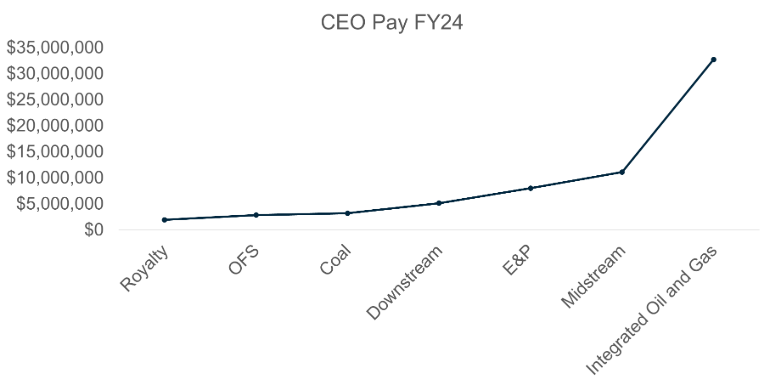
Energy companies support CEO pay increases amid market volatility
The above observations mirror our team's experiences advising compensation committees and management teams across the industry, as well as trends noted in our 2024 survey data.
Despite pressures from consolidation and commodity volatility, the industry continues to navigate a tight labor market, driving continued growth in compensation investments to attract and retain top talent.
Given the macro global volatility combined with oil and gas volatility and an average stock price drop of 11% since implementation of the April 2, 2025 tariffs, energy companies must continue to maintain a clear understanding of competitors' compensation actions to calibrate their offerings and plan design as needed.
Gallagher can help
Gallagher uses data, technology and experienced consulting to build trust in designing and evaluating executive compensation models to fit your strategic goals.
Our team can work with your compensation committee proactively to analyze market shifts and determine how your company's incentive model may need to evolve to align with changing business dynamics.