
Authors: Sarah Brannan Amy Boswell

For those having suicidal thoughts, it can be very challenging to reach out for help or to know where to turn — but help is available, suicide is preventable, and proactive steps taken within the workplace can make a huge difference.
For those bereaved by suicide, there are often intense and complex feelings of guilt, anger, and confusion. These emotions are rarely linear and can be difficult to process, especially in environments where stigma still exists. While deaths from suicide are rare in the workplace, when it does happen, the impact on those left behind is enormous.
In 2023, 6,069 suicides were registered in England and Wales, with men aged 45 to 64 the most affected demographic. Many other factors impact suicide incidence rates, however, including sexual orientation, gender identity, socio-economic status and bereavement. With rates of suicide climbing since the pandemic, this underscores the need for targeted mental health support and suicide prevention.
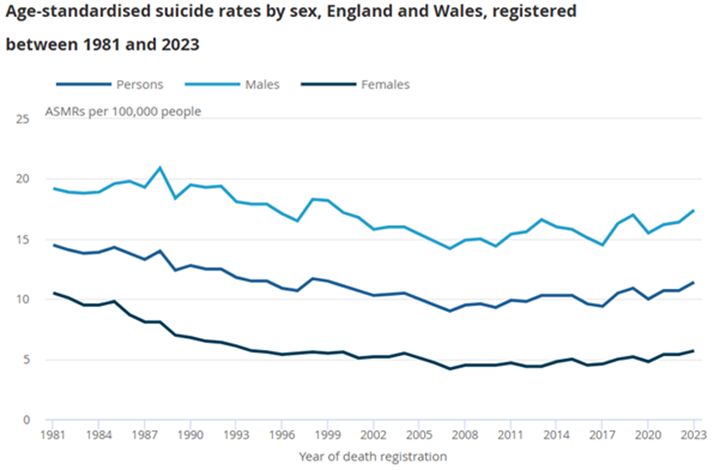
Source: Office for National Statistics1
Workplaces can provide genuine support by offering mental health resources and, in the case of crisis or bereavement, readily respond with empathy and practical support. The difference it makes when someone feels safe to speak, seek help, and grieve, cannot be overstated.
The role of employers
Creating a supportive and informed environment for all employees, treating mental health with the same approach as physical health, reducing stigma, and encouraging employees to engage with available support, are all key aspects of your wellbeing strategy.
Employers can play a vital role (and often with little or no financial outlay) by:
- Establishing a mental health strategy which includes understanding the risk, and ways to mitigate the risk, of suicide
- Empowering line managers to feel confident in identifying potential risks of suicide, talking to their team compassionately and appropriately about mental health, and where to go for additional support — many organisations offer line manager training
- Introducing trained mental health first aiders, giving employees a clear path to informed support, and sending an equally clear message that it is ok to seek help
- Providing on-site crisis support for bereaved colleagues in the event of a suicide
- Signposting specialist organisations that support those undergoing a mental health crisis, or those who may be affected by suicide loss (please see the end of this article for examples of some available resources)
- Offering webinars & education — there is a wealth of resources available at no charge that you can use to support your employees, from guides for line managers, to resources such as JAAQ (a free to all platform aimed at destigmatising mental health and offering support)
- Providing access to an Employee Assistance Programme (EAP) that offers immediate, confidential support, and can offer services such as on-site crisis support, should the worst happen, as well as providers often offering additional training and support for line managers
- Making the most of other benefits already in place, for example:
- Group life assurance policies are usually a core element of an employee benefit package, and often offer a wealth of resources around suicide prevention and bereavement support as part of their added value services
- Group income protection providers often offer early intervention support for mental health conditions alongside other added value benefits
- Occupational health services can offer confidential advice and support for staff from trained clinical specialists
- Private medical insurance may offer mental health support, and also added value services which can support ongoing wellbeing
- Communicating what is available — having support in place is a good first step, but it is wasted if employees aren't aware of it. Make mental health a key aspect of your ongoing comms programme; consider including a specific area on your intranet, regular reminders on what is available, and ensuring that signposting is easily found
- Reviewing bereavement policies to ensure that they are appropriate, recognise the unique challenges of suicide loss, and include signposting to support such as practical, legal and financial support (often via the EAP) as well as guidelines around time off etc
- Consider partnering with a suicide prevention or mental health organisation as your chosen charity for regular fundraising
Conclusion
The key message is that suicide is preventable and rare, but when it occurs, the loss is not just a personal tragedy, it's a workplace issue, and one where employers can make a real impact.
For those who have lived through suicidal thoughts or experienced bereavement from suicide, the presence or absence of support can shape the outcome significantly.
Support services
You will likely have many resources available through your employee benefits offering, but there are also many essential resources run by charities which provide excellent support and interventions at no cost that you may well also want to signpost to, depending on the circumstances.


